Once in Royal David's City is a Christmas carol by Cecil Frances Alexander, an Irish hymn writer, first published in 1848 in Hymns for Little Children. She wrote it to teach children the creed's line born of the Virgin Mary. It tells the birth in Bethlehem, Jesus' obedient childhood and the hope of seeing Him in heaven. Since 1919 it has opened the Festival of Nine Lessons and Carols at King's College, Cambridge, with a boy singing the first verse alone. Its opening rests on Luke 2:4, "unto the city of David, which is called Bethlehem".
Cecil Frances Alexander (1818-1895) was born in Dublin and spent most of her life in the north of Ireland, where her husband William later became Archbishop of Armagh. She wrote some of the most famous hymns in English, including All Things Bright and Beautiful and There Is a Green Hill Far Away, and she gave the profits from her books to a school for deaf children. Hymns for Little Children (1848) was her attempt to explain the Apostles' Creed to her godsons in simple verse. Once in Royal David's City illustrates the line born of the Virgin Mary. A year later the London organist Henry Gauntlett set it to the tune Irby. Today millions hear it every Christmas Eve, when the service broadcast from King's College Chapel begins with a single treble voice singing the first stanza. Below are all six stanzas, including two that most hymnals now leave out, and the 12 KJV passages behind them.
Once in Royal David's City: the words
Verse 1
Once in royal David's city
Stood a lowly cattle shed,
Where a mother laid her Baby
In a manger for His bed:
Mary was that mother mild,
Jesus Christ her little Child.
Verse 2
He came down to earth from heaven,
Who is God and Lord of all,
And His shelter was a stable,
And His cradle was a stall;
With the poor, and mean, and lowly,
Lived on earth our Saviour holy.
Verse 3
And through all His wondrous childhood
He would honour and obey,
Love and watch the lowly maiden
In whose gentle arms He lay:
Christian children all must be
Mild, obedient, good as He.
Verse 4
For He is our childhood's pattern,
Day by day like us He grew,
He was little, weak, and helpless,
Tears and smiles like us He knew;
And He feeleth for our sadness,
And He shareth in our gladness.
Verse 5
And our eyes at last shall see Him,
Through His own redeeming love,
For that Child so dear and gentle
Is our Lord in heaven above;
And He leads His children on
To the place where He is gone.
Verse 6
Not in that poor lowly stable,
With the oxen standing by,
We shall see Him; but in heaven,
Set at God's right hand on high;
Where like stars His children crowned
All in white shall wait around.
Words: Cecil Frances Alexander, Hymns for Little Children (London, 1848), hymn 11, written to explain the creed's words born of the Virgin Mary. All 6 stanzas were checked line by line against the first American edition of Hymns for Little Children (Philadelphia: H. Hooker, about 1850), pages 30-31 (Internet Archive scan), and the standard transcription (Wikipedia, Hymnary.org). That American printing reads lovely maiden in stanza 3 and When like stars in stanza 6; we print the standard lowly and Where. Tune: Irby, Henry J. Gauntlett (1849). Public domain.
Once in royal David's city: God and Lord of all in a stable
1. Luke 2:4
"And Joseph also went up from Galilee, out of the city of Nazareth, into Judæa, unto the city of David, which is called Bethlehem; (because he was of the house and lineage of David:)"
Once in royal David's city. Bethlehem was a small town, but it was royal because King David was born there a thousand years before Jesus. Luke explains why Mary and Joseph traveled there: Joseph went unto the city of David, which is called Bethlehem; (because he was of the house and lineage of David:) A Roman census moved a poor carpenter about eighty miles, and in doing so it put the promised Son of David in exactly the town the prophet Micah had named (see Micah 5:2). Mrs. Alexander's first line quietly reminds children that God keeps His promises down to the address.
2. Luke 2:12
"And this shall be a sign unto you; Ye shall find the babe wrapped in swaddling clothes, lying in a manger."
Where a mother laid her Baby in a manger for His bed. The angel gave the shepherds a strange sign: Ye shall find the babe wrapped in swaddling clothes, lying in a manger. Babies were often wrapped in cloth, but no newborn was put in a feeding trough unless there was nowhere else. That was how the shepherds would know which baby was the Saviour: the one in the most unlikely bed in Bethlehem. The carol's lowly cattle shed is not a pretty decoration. It is the sign God chose, so that the poorest visitor would not feel out of place.
3. Philippians 2:6-7
"Who, being in the form of God, thought it not robbery to be equal with God: But made himself of no reputation, and took upon him the form of a servant, and was made in the likeness of men:"
He came down to earth from heaven, who is God and Lord of all. This line packs the whole doctrine of the incarnation into simple words for children. Paul says the same: Who, being in the form of God, thought it not robbery to be equal with God: But made himself of no reputation, and took upon him the form of a servant. The baby in the stall did not stop being God. He chose to add a human nature to His divine nature and to live among the poor, and mean, and lowly. Mean here is the old sense: humble, of low rank.
4. Isaiah 9:6
"For unto us a child is born, unto us a son is given: and the government shall be upon his shoulder: and his name shall be called Wonderful, Counsellor, The mighty God, The everlasting Father, The Prince of Peace."
Our Saviour holy. Seven centuries before Bethlehem, Isaiah promised the child who would sit on David's throne: For unto us a child is born, unto us a son is given: and the government shall be upon his shoulder. The same verse calls Him The mighty God. Mrs. Alexander's second stanza says both things at once: Lord of all, and a baby in a stall. That paradox sits at the center of Christmas. The child is born, which makes Him truly human; the Son is given, which means He came from the Father. For the companion prophecy, see Isaiah 7:14.
His wondrous childhood: day by day like us He grew
5. Luke 2:51
"And he went down with them, and came to Nazareth, and was subject unto them: but his mother kept all these sayings in her heart."
He would honour and obey. The only story we have from Jesus' childhood ends with the boy going home with Mary and Joseph to Nazareth, where He was subject unto them: but his mother kept all these sayings in her heart. The Son of God, who had just amazed the teachers in the temple, went back to a carpenter's house and obeyed His parents. Mrs. Alexander turns this into a lesson for children, Mild, obedient, good as He. Some modern singers find the line old-fashioned, but the point is biblical: Jesus honored His father and mother, fulfilling the fifth commandment.
6. Luke 2:52
"And Jesus increased in wisdom and stature, and in favour with God and man."
Day by day like us He grew. Luke sums up about eighteen years in one verse: And Jesus increased in wisdom and stature, and in favour with God and man. Jesus did not skip childhood. He learned to walk, to speak, to read the Scriptures and to work with His hands. He grew in wisdom as well as height. That is why the carol can call Him our childhood's pattern. Children can know that Jesus was once their age, and parents can be encouraged that ordinary, unremarkable years of growing up are a place where God's favor rests.
7. John 11:35
"Jesus wept."
Tears and smiles like us He knew. The shortest verse in the Bible proves the point: Jesus wept. He cried at the grave of His friend Lazarus, even though He knew He was about to raise him from the dead. Jesus felt real grief. The Gospels also show Him enjoying weddings, meals and the company of children. Mrs. Alexander wanted children to know that Jesus was not a distant statue but someone who had laughed and cried as they do. When a child is sad, the carol says, He feeleth for our sadness, and He shareth in our gladness.
8. Hebrews 4:15
"For we have not an high priest which cannot be touched with the feeling of our infirmities; but was in all points tempted like as we are, yet without sin."
And He feeleth for our sadness. Hebrews gives the theology behind the line: For we have not an high priest which cannot be touched with the feeling of our infirmities; but was in all points tempted like as we are, yet without sin. Because Jesus lived a full human life, He understands weakness, pain and temptation from the inside. The next verse invites us to come boldly to the throne of grace. This is good news for children and adults alike. You never have to explain your feelings to Jesus as if He were a stranger to them.
Our eyes at last shall see Him: set at God's right hand on high
9. 1 John 3:2
"Beloved, now are we the sons of God, and it doth not yet appear what we shall be: but we know that, when he shall appear, we shall be like him; for we shall see him as he is."
And our eyes at last shall see Him. The fifth stanza lifts the carol from Bethlehem to eternity. John writes: when he shall appear, we shall be like him; for we shall see him as he is. The shepherds saw Jesus as a baby; His followers saw Him as a man; one day His people will see Him in His glory. Mrs. Alexander adds that this happens through His own redeeming love, not because we were good enough. The obedience she urged on children in stanza 3 is a response to His love, not a ticket to heaven.
10. Hebrews 1:3
"Who being the brightness of his glory, and the express image of his person, and upholding all things by the word of his power, when he had by himself purged our sins, sat down on the right hand of the Majesty on high;"
Set at God's right hand on high. The last stanza contrasts two places: the poor lowly stable and the right hand of God. Hebrews describes where Jesus is now: when he had by himself purged our sins, sat down on the right hand of the Majesty on high. Sitting down means the work of salvation is finished. The right hand is the place of highest honor and authority. The baby who once had no room in the inn now rules from the highest throne there is, and He has gone ahead to prepare a place for His children (John 14:2).
11. Revelation 7:9
"After this I beheld, and, lo, a great multitude, which no man could number, of all nations, and kindreds, and people, and tongues, stood before the throne, and before the Lamb, clothed with white robes, and palms in their hands;"
All in white shall wait around. Mrs. Alexander's closing picture comes from John's vision of heaven: a great multitude, which no man could number, of all nations, and kindreds, and people, and tongues, stood before the throne, and before the Lamb, clothed with white robes. The white robes stand for purity given by Christ; verse 14 says they were washed in the blood of the Lamb. The carol imagines children among that crowd. Christmas starts in a cattle shed with a handful of shepherds; it ends with a countless crowd from every nation gathered around the same Jesus.
12. Daniel 12:3
"And they that be wise shall shine as the brightness of the firmament; and they that turn many to righteousness as the stars for ever and ever."
Where like stars His children crowned. The image of God's people shining like stars comes from Daniel: they that turn many to righteousness as the stars for ever and ever. Jesus used similar language, saying the righteous will shine forth as the sun in the kingdom of their Father (Matthew 13:43). Crowns appear in the New Testament as rewards for faithfulness (2 Timothy 4:8). For a children's hymn, it is a lovely ending: the little ones who learn to follow Jesus now will one day shine with Him for ever, not as servants at the edge, but as children crowned.
A short prayer
Lord Jesus, You came down to earth from heaven, God and Lord of all, and made a cattle shed Your first home. Thank You for growing up as we do, for knowing tears and smiles, and for feeling our sadness and sharing our gladness. Help me to honour and obey as You did, and to trust Your redeeming love, not my own goodness. Keep my eyes on the day I will see You as You are, at God's right hand on high. Lead me, and all Your children, to the place where You have gone. Amen.
Go deeper: a SOAP study prompt
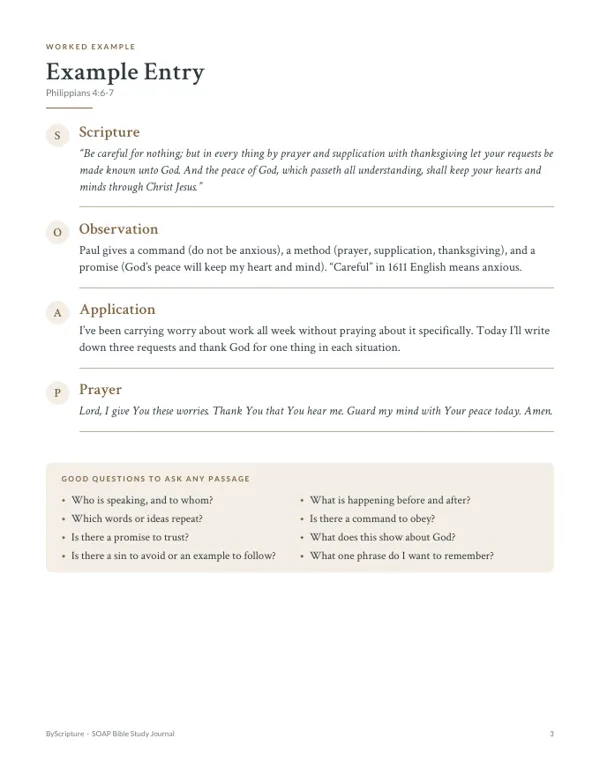
Pick one verse above and write: - Scripture: copy the verse by hand. - Observation: what does it say? Who is speaking, to whom? - Application: what does it mean for you today? - Prayer: turn it into a two-line prayer.
New to this method? See our Bible study guide or pick a Bible reading plan.
Print the free Christian Christmas coloring pages for children · Light the Advent wreath with the free Advent candle printable · Memorize Luke 2:52 with Scripture memory cards
Frequently asked questions
Who wrote Once in Royal David's City?
Cecil Frances Alexander (1818-1895), an Irish hymn writer and the wife of William Alexander, later Archbishop of Armagh, wrote the words. They were published in her Hymns for Little Children (1848). The tune, Irby, was written by the English organist Henry John Gauntlett in 1849. The famous King's College arrangement was made by Arthur Henry Mann, organist there from 1876 to 1929.
Why is Once in Royal David's City sung first at King's College?
Since 1919 the Festival of Nine Lessons and Carols at King's College, Cambridge, has opened with this carol as its processional hymn. A boy chorister sings the first verse alone, without accompaniment, and by tradition he is told he will sing it only moments before the broadcast begins. The choir sings the second verse, and the congregation joins from the third. The service is broadcast around the world on Christmas Eve.
How many verses does Once in Royal David's City have?
Mrs. Alexander wrote six stanzas, all printed on this page. Many modern hymnals print four or five, often leaving out the third (Christian children all must be mild, obedient, good as He) and sometimes the fourth. The King's College service usually sings six. The full text tells the whole story, from the stable to the right hand of God.
Is Once in Royal David's City in the public domain?
Yes. The words were published in 1848 and the tune Irby in 1849, so both are in the public domain. You can print and sing the traditional words freely. Specific modern arrangements and descants, such as the well-known descant by David Willcocks, may still be under copyright, so check before reproducing printed music.
Sources: All Scripture quotations are from the King James Version (KJV), public domain in the United States. References were checked against the KJV text from bible-api.com.
Related: Away in a Manger · O Little Town of Bethlehem · Micah 5:2 Meaning · The Christmas Story in the Bible · What Child Is This? · Bible Verses for Kids · Christmas · Mary, the Mother of Jesus
Explore more: All Bible verses by topic · KJV Bible verses · Verse of the day · Prayers · Bible study · Bible reading plans