Amazing Grace is a hymn by John Newton, a former slave-ship captain who became an Anglican minister. He wrote it for a New Year's Day sermon in 1773 on 1 Chronicles 17:16-17, and it was printed in Olney Hymns in 1779. Newton wrote six stanzas; the well-known When we've been there ten thousand years was added later from another hymn. Its most famous line echoes the blind man healed by Jesus: "whereas I was blind, now I see" (John 9:25).
Few songs in the world are better known than Amazing Grace, and few have a more surprising author. John Newton (1725-1807) went to sea as a boy, was pressed into the Royal Navy, and spent years in the Atlantic slave trade, first as a sailor, then as captain of slave ships. In March 1748, during a violent storm off the coast of Ireland, he cried out to God, and he dated his conversion from that night. His change was slow: he kept working in the trade for several more years before illness ended his sailing. In 1764 he was ordained and became curate of Olney, a small lace-making town in England. There he and the poet William Cowper wrote hymns for the weekly prayer meeting. Newton wrote Amazing Grace for New Year's Day 1773, to go with a sermon on King David's prayer, Who am I, O LORD God. Decades later, in 1788, Newton published a pamphlet confessing his part in the slave trade and supported William Wilberforce's campaign to end it. The hymn is the testimony of a man who knew exactly how far grace had reached to find him. Below are Newton's six original stanzas, the later seventh stanza, and the 12 KJV passages behind them.
Amazing Grace: the words
Verse 1
Amazing grace! (how sweet the sound!)
That saved a wretch like me!
I once was lost, but now am found,
Was blind, but now I see.
Verse 2
'Twas grace that taught my heart to fear,
And grace my fears relieved;
How precious did that grace appear
The hour I first believed!
Verse 3
Through many dangers, toils, and snares,
I have already come;
'Tis grace has brought me safe thus far,
And grace will lead me home.
Verse 4
The Lord has promised good to me,
His word my hope secures;
He will my shield and portion be
As long as life endures.
Verse 5
Yes, when this flesh and heart shall fail,
And mortal life shall cease,
I shall possess, within the veil,
A life of joy and peace.
Verse 6
The earth shall soon dissolve like snow,
The sun forbear to shine;
But God, who call'd me here below,
Will be for ever mine.
Later stanza (not by Newton)
When we've been there ten thousand years,
Bright shining as the sun,
We've no less days to sing God's praise
Than when we'd first begun.
Words: John Newton, written for his parish in Olney, England, for New Year's Day 1773, and first printed as Hymn 41 of Book I in Olney Hymns (London, 1779), titled Faith's Review and Expectation, on 1 Chronicles 17:16-17. Text from the Olney Hymns transcription on Wikisource, with the dashes of the 1779 printing dropped. The last stanza is not Newton's: it comes from an older anonymous hymn, was sung with Amazing Grace in America in the 1800s (Harriet Beecher Stowe quotes it in Uncle Tom's Cabin, 1852), and was fixed in place by Edwin O. Excell's arrangement of 1910. All public domain. The usual tune, New Britain, is an American folk melody first printed in 1829 and paired with these words by William Walker in The Southern Harmony (1835).
Who am I? A wretch saved by grace
1. 1 Chronicles 17:16
"And David the king came and sat before the LORD, and said, Who am I, O LORD God, and what is mine house, that thou hast brought me hitherto?"
This is the verse Newton preached on when Amazing Grace was first sung. God had just promised King David a house that would last for ever, and David's reply was not pride but wonder: Who am I, O LORD God, and what is mine house, that thou hast brought me hitherto? Newton's 1779 title for the hymn was Faith's Review and Expectation. The first half of the hymn reviews how far God has brought him; the second half looks ahead to what God has promised. Every believer can pray David's question. None of us earned the road we have been led along.
2. Ephesians 2:8
"For by grace are ye saved through faith; and that not of yourselves: it is the gift of God:"
Amazing grace. Grace means a gift given to someone who has not earned it and cannot repay it. Paul puts it plainly: For by grace are ye saved through faith; and that not of yourselves: it is the gift of God. Newton called himself a wretch because he knew he had done nothing to deserve rescue. He had mocked faith, led others into sin and traded in human lives. Salvation did not come as a reward for reforming himself. It came as a gift, and that is exactly what made it amazing to him.
3. Luke 15:24
"For this my son was dead, and is alive again; he was lost, and is found. And they began to be merry."
I once was lost, but now am found. The line comes from Jesus' parable of the prodigal son. The younger son wasted everything in a far country, then came home expecting to be a servant. His father ran to meet him and threw a feast: For this my son was dead, and is alive again; he was lost, and is found. And they began to be merry. Newton saw his own life in that story. He had wandered as far as a person can go, and the Father still came looking. The parable ends with joy in the house, not a lecture at the door.
4. John 9:25
"He answered and said, Whether he be a sinner or no, I know not: one thing I know, that, whereas I was blind, now I see."
Was blind, but now I see. When Jesus healed a man born blind, the religious leaders questioned him again and again, trying to make him say something against Jesus. The man could not answer all their arguments, but he knew one thing: one thing I know, that, whereas I was blind, now I see. That is the simplest kind of testimony, and Newton chose it to close his first stanza. You do not need to win every debate to tell what God has done. A changed life speaks for itself.
Grace that taught my heart to fear, and grace that leads me home
5. Psalms 130:4
"But there is forgiveness with thee, that thou mayest be feared."
Grace that taught my heart to fear, and grace my fears relieved. The second stanza sounds like a riddle: how can the same grace bring fear and then remove it? Psalm 130 explains it. But there is forgiveness with thee, that thou mayest be feared. Grace first opens a person's eyes to the holiness of God and the seriousness of sin, which is a right and healthy fear. Then the same grace shows that God forgives, and the terror gives way to reverent trust. The fear of the LORD that remains is not dread but awe and love.
6. Psalms 34:19
"Many are the afflictions of the righteous: but the LORD delivereth him out of them all."
Through many dangers, toils, and snares, I have already come. Newton survived shipwreck, near drowning, fever and a period when he was held almost as a slave himself on an island off West Africa. He did not pretend that faith had made his life easy. David says: Many are the afflictions of the righteous: but the LORD delivereth him out of them all. The promise is not that there will be no dangers, but that God brings His people through them. Looking back at every narrow escape, Newton saw grace at work long before he knew God.
7. Psalms 84:11
"For the LORD God is a sun and shield: the LORD will give grace and glory: no good thing will he withhold from them that walk uprightly."
The Lord has promised good to me; He will my shield and portion be. The fourth stanza is built on this psalm: For the LORD God is a sun and shield: the LORD will give grace and glory: no good thing will he withhold from them that walk uprightly. A shield protects; grace and glory are given. Newton's word secures matters too. His hope did not rest on his feelings, which rose and fell, but on God's word, which does not change. A promise from God is something you can stand on when everything else is shaking.
8. Psalms 73:26
"My flesh and my heart faileth: but God is the strength of my heart, and my portion for ever."
Yes, when this flesh and heart shall fail. Newton borrowed this line straight from Psalm 73: My flesh and my heart faileth: but God is the strength of my heart, and my portion for ever. Newton lived to eighty-two, and near the end his memory was going. He is often quoted as saying that he remembered two things: that he was a great sinner, and that Christ was a great Savior. When the body weakens and the mind grows dim, God remains the strength of the heart. Our hold on Him may weaken, but His hold on us does not.
Within the veil: the hope beyond this life
9. Hebrews 6:19
"Which hope we have as an anchor of the soul, both sure and stedfast, and which entereth into that within the veil;"
I shall possess, within the veil, a life of joy and peace. The veil was the curtain in the temple that hid the Most Holy Place, where God's presence dwelt. Hebrews says Christ has gone through it ahead of us, and our hope goes with Him: Which hope we have as an anchor of the soul, both sure and stedfast, and which entereth into that within the veil. Newton was a sailor; he knew what an anchor meant in a storm. Christian hope is not wishful thinking. It is fastened to a place where Jesus already is.
10. 2 Peter 3:10
"But the day of the Lord will come as a thief in the night; in the which the heavens shall pass away with a great noise, and the elements shall melt with fervent heat, the earth also and the works that are therein shall be burned up."
The earth shall soon dissolve like snow, the sun forbear to shine. Newton's sixth stanza is about the end of the world as we know it, and he draws on Peter's warning: the heavens shall pass away with a great noise, and the elements shall melt with fervent heat, the earth also and the works that are therein shall be burned up. That sounds frightening, and it is meant to be sobering. But Newton ends the stanza with peace, not panic: God will be for ever mine. Everything that can be shaken will pass; the God who called us will not.
11. Psalms 73:24
"Thou shalt guide me with thy counsel, and afterward receive me to glory."
But God, who call'd me here below, will be for ever mine. The same psalm that gave Newton his fifth stanza gives the promise behind his last: Thou shalt guide me with thy counsel, and afterward receive me to glory. God's call began here below, in a storm on the Atlantic and in a slow, stumbling change of heart. His guidance continued through every year that followed. And it ends with being received into glory. Grace that has brought me safe thus far, as the hymn says, will lead me home.
12. Revelation 22:5
"And there shall be no night there; and they need no candle, neither light of the sun; for the Lord God giveth them light: and they shall reign for ever and ever."
Bright shining as the sun. The stanza added after Newton looks to eternity, where the sun is no longer needed: And there shall be no night there; and they need no candle, neither light of the sun; for the Lord God giveth them light: and they shall reign for ever and ever. Ten thousand years is a way of trying to picture forever, and failing on purpose. However long God's people have praised Him, they will not have run out of time or reasons. Grace will still be amazing.
A short prayer
Lord God, who am I, that You have brought me this far? I was lost, and You found me. I was blind, and You opened my eyes. Thank You for grace that showed me my sin and grace that took away my fear. Through all the dangers, toils and snares of my life, You have kept me, and I trust You to lead me home. When my flesh and heart fail, be the strength of my heart and my portion for ever. Let my life tell the story of Your amazing grace, today and for ten thousand years. In Jesus' name, Amen.
Go deeper: a SOAP study prompt
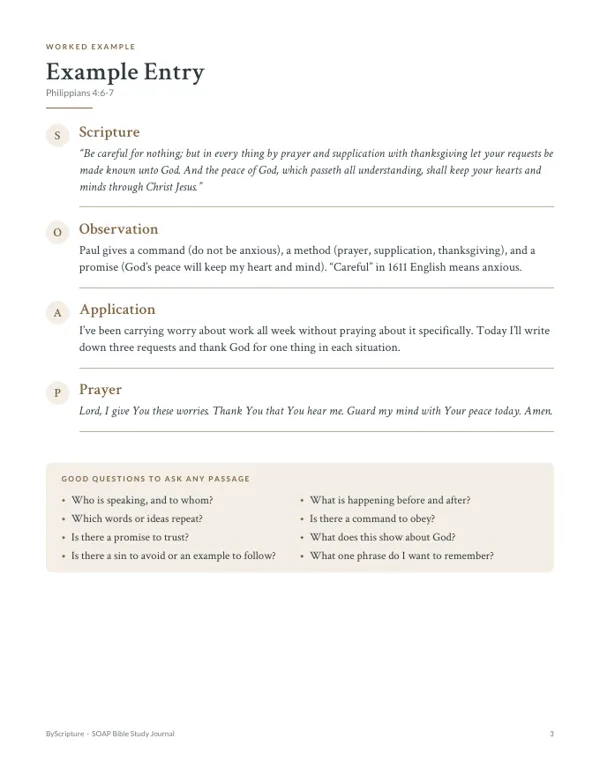
Pick one verse above and write: - Scripture: copy the verse by hand. - Observation: what does it say? Who is speaking, to whom? - Application: what does it mean for you today? - Prayer: turn it into a two-line prayer.
New to this method? See our Bible study guide or pick a Bible reading plan.
Write your own testimony in the 30-day prayer journal · Start the year with the free New Year Scripture plan · Memorize Ephesians 2:8 with Scripture memory cards
Frequently asked questions
Who wrote Amazing Grace?
John Newton (1725-1807), an English sailor and former captain of slave ships who became an Anglican clergyman, wrote the words. He wrote them for New Year's Day 1773 in the parish of Olney, and they were published in Olney Hymns (1779), which he compiled with William Cowper. The tune most people know, New Britain, is an anonymous American melody. It was first joined to Newton's words in 1835, long after his death.
How many verses does Amazing Grace have?
Newton wrote six stanzas. Most hymnals print four or five of them and add a stanza that begins When we've been there ten thousand years. That stanza is not Newton's. It is an older anonymous verse that American singers attached to the hymn in the 1800s, and Edwin O. Excell's 1910 arrangement made it the standard last verse. The phrase My chains are gone, used in a popular modern version, is a 2006 addition and is under copyright.
Is Amazing Grace in the public domain?
Yes. Newton's words were published in 1779, the extra stanza is older than 1910, and the New Britain tune was printed in 1829, so the traditional hymn is in the public domain. Modern arrangements with new choruses or bridges, such as Amazing Grace (My Chains Are Gone), are copyrighted, so print only the traditional words unless you have a license.
What does wretch mean in Amazing Grace?
A wretch is a miserable, worthless or wicked person. Some modern versions change the line to saved a soul like me, but Newton chose the word on purpose. He believed that seeing yourself as a sinner in need of rescue is where grace begins, as Paul wrote, O wretched man that I am (Romans 7:24). The word is not meant to crush the singer; it makes the grace in the next line shine brighter.
Sources: All Scripture quotations are from the King James Version (KJV), public domain in the United States. References were checked against the KJV text from bible-api.com.
Related: Grace · Salvation · Testimony · Forgiveness · When I Survey the Wondrous Cross · The Romans Road · Hope · Heaven · Rock of Ages (lyrics)
Explore more: All Bible verses by topic · KJV Bible verses · Verse of the day · Prayers · Bible study · Bible reading plans