Rescue the Perishing is a gospel hymn written by Fanny J. Crosby in 1869, with music by William H. Doane. It calls Christians to care for people lost in sin: Rescue the perishing, care for the dying, snatch them in pity from sin and the grave. Its refrain gives the reason for hope: Jesus is merciful, Jesus will save. The hymn draws on Jude 1:23 (pulling them out of the fire) and on Jesus' own mission, to seek and to save that which was lost (Luke 19:10). It has long been a favorite of rescue missions, evangelism rallies and mission Sundays.
Fanny Crosby, blind from infancy, wrote thousands of hymns, among them Blessed Assurance, Pass Me Not, O Gentle Savior and Jesus, Keep Me Near the Cross. She also spent much of her life working among the poor in the missions of lower Manhattan. Crosby later said that Rescue the Perishing came to her after an evening speaking at a mission in New York, when she felt urged to say that a mother's boy might be lost there that night, and a young man came forward and found Christ. Whatever the details, the hymn carries the heart of that work. It does not shame the lost. It weeps over them, pleads with them gently, and believes that grace can restore what sin has crushed. Below are the four verses and refrain as printed in 1894, followed by 12 KJV passages on the God who seeks the lost and sends His people after them.
Rescue the Perishing: the words
Verse 1
Rescue the perishing,
Care for the dying,
Snatch them in pity from sin and the grave;
Weep o'er the erring one,
Lift up the fallen,
Tell them of Jesus the mighty to save.
Refrain:
Rescue the perishing,
Care for the dying;
Jesus is merciful,
Jesus will save.
Verse 2
Though they are slighting Him,
Still He is waiting,
Waiting the penitent child to receive;
Plead with them earnestly,
Plead with them gently:
He will forgive if they only believe.
Refrain:
Rescue the perishing,
Care for the dying;
Jesus is merciful,
Jesus will save.
Verse 3
Down in the human heart,
Crushed by the tempter,
Feelings lie buried that grace can restore:
Touched by a loving heart,
Wakened by kindness,
Chords that were broken will vibrate once more.
Refrain:
Rescue the perishing,
Care for the dying;
Jesus is merciful,
Jesus will save.
Verse 4
Rescue the perishing,
Duty demands it;
Strength for thy labor the Lord will provide:
Back to the narrow way
Patiently win them;
Tell the poor wanderer a Saviour has died.
Refrain:
Rescue the perishing,
Care for the dying;
Jesus is merciful,
Jesus will save.
Words: Fanny J. Crosby (1820-1915), 1869. Music: William H. Doane (1832-1915), 1870. Text copied from Gospel Hymns Nos. 1 to 6 Complete (New York and Chicago, 1894), hymn 592, checked against Hymns of Consolation (Internet Archive scans). The refrain is sung after every verse. Public domain.
Rescue the perishing: the Saviour who seeks the lost
1. Luke 19:10
"For the Son of man is come to seek and to save that which was lost."
Jesus said this in the house of Zacchaeus, a tax collector everyone in Jericho despised: For the Son of man is come to seek and to save that which was lost. The crowd murmured that Jesus had gone to be the guest of a sinner. Jesus answered that this was exactly why He came. Rescue the Perishing is built on this mission. Christians do not rescue anyone by their own power, but they share in Christ's search for the lost. The hymn's refrain, Jesus is merciful, Jesus will save, is the confidence behind every effort. The Seeker is also the Saviour.
2. Jude 1:22-23
"And of some have compassion, making a difference: And others save with fear, pulling them out of the fire; hating even the garment spotted by the flesh."
Crosby's first verse says, Snatch them in pity from sin and the grave. Jude writes, And of some have compassion, making a difference: And others save with fear, pulling them out of the fire. The picture is of someone dragging a person out of a burning house. There is urgency, and there is also discernment: making a difference means treating people according to their need. Some need patient compassion, others urgent warning. Notice the last phrase, hating even the garment spotted by the flesh. We love the sinner and hate the sin that is destroying him.
3. Matthew 18:14
"Even so it is not the will of your Father which is in heaven, that one of these little ones should perish."
After the parable of the shepherd who leaves ninety-nine sheep to find one, Jesus says, Even so it is not the will of your Father which is in heaven, that one of these little ones should perish. God's heart goes out to the one who has wandered. The hymn's word perishing is the same word Jesus uses here. It describes people heading for ruin. God does not shrug at that. He sends out His Son, and His Son sends out His people. One person matters enough to leave the safety of the fold and go looking.
4. Proverbs 24:11
"If thou forbear to deliver them that are drawn unto death, and those that are ready to be slain;"
This proverb is a call to rescue: If thou forbear to deliver them that are drawn unto death, and those that are ready to be slain. The next verse warns that we cannot excuse ourselves by saying we did not know (Proverbs 24:12). God sees the heart. The proverb speaks first of physical danger, but Christians have long applied it to spiritual danger too. Crosby's Care for the dying covers both. Many rescue missions that sang her hymn fed the hungry and housed the homeless while they preached the gospel. Love for souls includes care for bodies.
Still He is waiting: patience and gentleness
5. 2 Peter 3:9
"The Lord is not slack concerning his promise, as some men count slackness; but is longsuffering to us-ward, not willing that any should perish, but that all should come to repentance."
The second verse says, Though they are slighting Him, still He is waiting. Peter explains God's patience: The Lord is not slack concerning his promise ... but is longsuffering to us-ward, not willing that any should perish, but that all should come to repentance. People sometimes mock the delay of Christ's return. Peter says the delay is mercy. God is giving time for people to turn to Him. This is why we can plead with them earnestly. The door is still open, and the One who waits is longsuffering. But His patience is not forever, and that is why the hymn is urgent.
6. Luke 15:20
"And he arose, and came to his father. But when he was yet a great way off, his father saw him, and had compassion, and ran, and fell on his neck, and kissed him."
Waiting the penitent child to receive is a picture of the prodigal son. When he was yet a great way off, his father saw him, and had compassion, and ran, and fell on his neck, and kissed him. The father had been watching the road. He did not make his son grovel or earn his way back. He ran. This is how God receives a sinner who turns to Him. Crosby wants every Christian who goes after the lost to carry this message: you will not be turned away. He will forgive if they only believe.
7. Isaiah 42:3
"A bruised reed shall he not break, and the smoking flax shall he not quench: he shall bring forth judgment unto truth."
The third verse says, Down in the human heart, crushed by the tempter, feelings lie buried that grace can restore. Isaiah describes the Servant of the LORD this way: A bruised reed shall he not break, and the smoking flax shall he not quench. A bruised reed is almost snapped; smoking flax is a wick about to go out. Many people are like that, damaged by sin and nearly without hope. Christ does not finish them off. He mends what is bruised and fans what is smoking. Matthew 12:20 applies this verse to Jesus. That is why grace can restore.
8. Galatians 6:1
"Brethren, if a man be overtaken in a fault, ye which are spiritual, restore such an one in the spirit of meekness; considering thyself, lest thou also be tempted."
Paul tells the Galatians how to help someone who has fallen into sin: ye which are spiritual, restore such an one in the spirit of meekness; considering thyself, lest thou also be tempted. Restore is the word used for setting a broken bone or mending a net. It is careful, patient work. And the attitude is meekness, not superiority. Crosby says, Touched by a loving heart, wakened by kindness, chords that were broken will vibrate once more. Kindness is not weakness in this work. It is the way God's grace usually reaches a broken heart.
Duty demands it: strength for the labor
9. 1 Corinthians 9:16
"For though I preach the gospel, I have nothing to glory of: for necessity is laid upon me; yea, woe is unto me, if I preach not the gospel!"
Rescue the perishing, duty demands it. Paul felt the same: necessity is laid upon me; yea, woe is unto me, if I preach not the gospel! Paul did not preach because it made him important. He says he had nothing to glory of. He preached because he had been entrusted with a message that people needed and could not get anywhere else. Duty here is not cold obligation. It is the duty of someone who knows where the lifeboat is. Love for God and love for people make it impossible to keep quiet.
10. Luke 14:23
"And the lord said unto the servant, Go out into the highways and hedges, and compel them to come in, that my house may be filled."
In the parable of the great supper, the invited guests made excuses. So the master sent his servant to the streets and lanes for the poor and the lame, and then said, Go out into the highways and hedges, and compel them to come in, that my house may be filled. Compel here means urge strongly, not force. The master wants his house full. Crosby's Back to the narrow way patiently win them is this kind of urging: persistent, warm, willing to go where outsiders live. The rescue missions of her day went to the highways and hedges of the city, and people came in.
11. James 5:20
"Let him know, that he which converteth the sinner from the error of his way shall save a soul from death, and shall hide a multitude of sins."
James ends his letter with a word about bringing back someone who has wandered from the truth: he which converteth the sinner from the error of his way shall save a soul from death, and shall hide a multitude of sins. It is God who saves, but He is pleased to use people as His instruments. That is a great privilege. A friend who patiently brings someone back to Christ has done something with eternal results. The hymn's words lift up the fallen and patiently win them describe exactly this ministry, which every believer can share.
12. Deuteronomy 33:25
"Thy shoes shall be iron and brass; and as thy days, so shall thy strength be."
The last verse promises, Strength for thy labor the Lord will provide. Moses blessed the tribe of Asher with words Christians have claimed ever since: as thy days, so shall thy strength be. God gives strength matched to each day's demands. Reaching the lost can be discouraging work. People slight the message, progress is slow, and the need seems endless. The hymn does not deny that. It promises that the Lord who sends will also supply. The worker does not need tomorrow's strength today. He needs to be faithful today, and God will provide.
A short prayer
Lord Jesus, You came to seek and to save that which was lost, and You found me. Give me Your heart for people who are perishing. Help me to weep over the erring, lift up the fallen and tell them of You, the mighty to save. Make me gentle and patient, never proud. Thank You that You are still waiting to receive every penitent child, and that grace can restore what sin has crushed. Give me strength for the labor, day by day. In Your name, Amen.
Go deeper: a SOAP study prompt
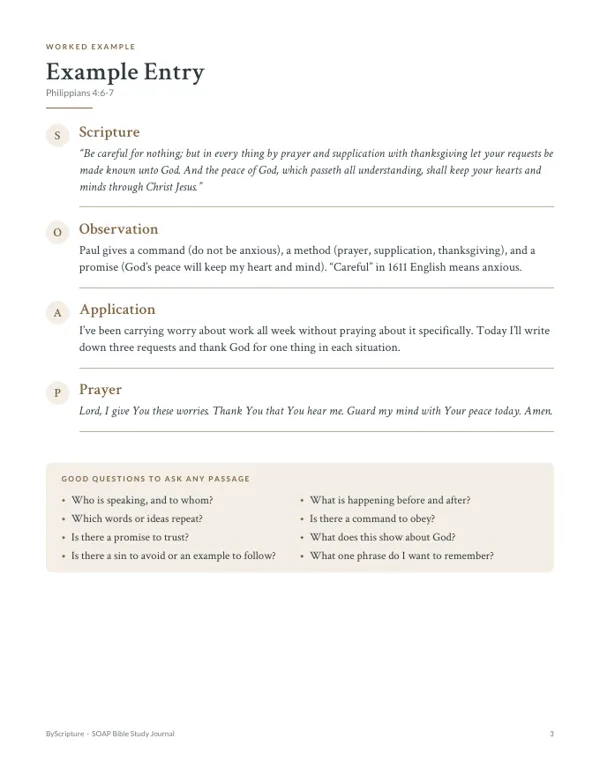
Pick one verse above and write: - Scripture: copy the verse by hand. - Observation: what does it say? Who is speaking, to whom? - Application: what does it mean for you today? - Prayer: turn it into a two-line prayer.
New to this method? See our Bible study guide or pick a Bible reading plan.
Print the free Romans Road printable · Print free Bible verse bookmarks to share · Pray for lost friends with the 30-Day Prayer Journal
Frequently asked questions
Who wrote Rescue the Perishing?
Fanny J. Crosby (1820-1915), the blind hymn writer, wrote the words in 1869. William Howard Doane (1832-1915), an industrialist and composer who set many of her hymns, wrote the music in 1870. Crosby and Doane also wrote Pass Me Not, O Gentle Savior and Jesus, Keep Me Near the Cross.
What is the story behind Rescue the Perishing?
Crosby said the hymn came to her after an evening speaking at a mission in New York City, when she felt moved to say that some mother's son might need rescuing that night, and a young man came forward and trusted Christ. She wrote the words the same night. She worked for decades among the poor in Manhattan missions.
What Bible verses is Rescue the Perishing based on?
The hymn draws on Jude 1:23 (pulling them out of the fire), Luke 19:10 (the Son of man is come to seek and to save that which was lost), Luke 14:23 (go out into the highways and hedges) and 2 Peter 3:9 (not willing that any should perish).
Is Rescue the Perishing in the public domain?
Yes. Crosby's words (1869) and Doane's tune (1870) are in the public domain in the United States. The four verses and refrain printed above may be copied and sung freely.
Sources: All Scripture quotations are from the King James Version (KJV), public domain in the United States. References were checked against the KJV text from bible-api.com.
Related: Pass Me Not, O Gentle Savior · Jesus, Keep Me Near the Cross · Blessed Assurance · I Love to Tell the Story · The Romans Road · Sharing the Gospel · Missionary Work · Prodigal Son
Explore more: All Bible verses by topic · KJV Bible verses · Verse of the day · Prayers · Bible study · Bible reading plans