The Holly and the Ivy is a traditional English Christmas carol, printed in 19th-century carol books and probably much older. It takes the evergreen holly, used to decorate homes in winter, and turns each part of it into a picture of Christ: the white blossom for His purity, the red berry for His blood shed to do poor sinners good, the sharp prickle for the crown of thorns, and the bitter bark for the gall He was offered on the cross. The repeated line And Mary bore sweet Jesus Christ keeps every verse anchored to Christmas.
Long before Christmas trees came to England, people brought holly and ivy indoors in December. They were among the few green plants left in winter, and the holly's red berries brightened dark homes. Some of these customs were older than Christianity, and English Christians did what believers have often done: they gave the familiar things a gospel meaning. The Holly and the Ivy is the clearest example. The ivy is mentioned only in the first and last verses; the holly does all the work, and each verse holds up one feature of the plant beside one truth about Jesus. It moves from His birth to His suffering and His crown. Below are the words as printed around 1871, then 12 KJV verses behind them.
The Holly and the Ivy: the words
Verse 1
The holly and the ivy,
When they are both full grown,
Of all the trees that are in the wood,
The holly bears the crown.
Refrain:
O the rising of the sun,
And the running of the deer,
The playing of the merry organ,
Sweet singing in the choir.
Verse 2
The holly bears a blossom,
As white as lily-flower;
And Mary bore sweet Jesus Christ,
To be our sweet Saviour.
Refrain:
O the rising of the sun,
And the running of the deer,
The playing of the merry organ,
Sweet singing in the choir.
Verse 3
The holly bears a berry,
As red as any blood;
And Mary bore sweet Jesus Christ,
To do poor sinners good.
Refrain:
O the rising of the sun,
And the running of the deer,
The playing of the merry organ,
Sweet singing in the choir.
Verse 4
The holly bears a prickle,
As sharp as any thorn;
And Mary bore sweet Jesus Christ,
On Christmas Day in the morn.
Refrain:
O the rising of the sun,
And the running of the deer,
The playing of the merry organ,
Sweet singing in the choir.
Verse 5
The holly bears a bark,
As bitter as any gall;
And Mary bore sweet Jesus Christ,
For to redeem us all.
Refrain:
O the rising of the sun,
And the running of the deer,
The playing of the merry organ,
Sweet singing in the choir.
Verse 6
The holly and the ivy
Now both are full well grown,
Of all the trees that are in the wood,
The holly bears the crown.
Refrain:
O the rising of the sun,
And the running of the deer,
The playing of the merry organ,
Sweet singing in the choir.
Words and tune: traditional English carol. Its age is uncertain; the words were printed in several 19th-century carol collections, and the usual tune was collected by Cecil Sharp in Gloucestershire and published in 1911. Text copied from Christmas Carols New and Old, edited by Henry Ramsden Bramley and John Stainer (London: Novello, about 1871; Internet Archive scan, Princeton Theological Seminary copy), carol 23. Verse 1 is printed under the music there and is given in its standard form. That book prints the refrain once in full and then O the rising of the sun, etc. after each verse, and spells the last word quire, the old spelling of choir. Public domain.
And Mary bore sweet Jesus Christ: born to save
1. Matthew 1:21
"And she shall bring forth a son, and thou shalt call his name JESUS: for he shall save his people from their sins."
Every verse of the carol repeats one line: And Mary bore sweet Jesus Christ. Then it says why. To be our sweet Saviour, to do poor sinners good, to redeem us all. The angel told Joseph the same thing before the birth: And she shall bring forth a son, and thou shalt call his name JESUS: for he shall save his people from their sins. The name Jesus is the Greek form of Joshua, meaning the LORD saves. The carol never lets the baby be only a sweet baby. He is born with a mission written into His name, and the holly keeps pointing to that mission.
2. Galatians 4:4
"But when the fulness of the time was come, God sent forth his Son, made of a woman, made under the law,"
But when the fulness of the time was come, God sent forth his Son, made of a woman, made under the law. The carol's simple phrase Mary bore sweet Jesus Christ holds a deep truth. The Son was sent from heaven, so He existed before Mary. Yet He was made of a woman, a real child carried and born in the ordinary way. And He came at the fulness of the time, the moment God had chosen. Folk carols like this one were sung by people who could not read, and lines repeated five times helped them hold on to the heart of the faith: God's Son was born for us.
3. Luke 19:10
"For the Son of man is come to seek and to save that which was lost."
The third verse says Mary bore sweet Jesus Christ to do poor sinners good. Jesus described His own mission the same way after He called the tax collector Zacchaeus down from a tree: For the Son of man is come to seek and to save that which was lost. The carol's poor sinners are not a special class of especially bad people. They are all of us, poor because we have nothing to pay and sinners because we have broken God's law. The good Jesus does is not general kindness but rescue. He came looking for the lost, and He does not stop until He finds them.
4. 1 Timothy 1:15
"This is a faithful saying, and worthy of all acceptation, that Christ Jesus came into the world to save sinners; of whom I am chief."
This is a faithful saying, and worthy of all acceptation, that Christ Jesus came into the world to save sinners; of whom I am chief. Paul wrote this near the end of his life, and he still counted himself the worst of sinners, saved only by mercy. The carol's line To be our sweet Saviour is the same faithful saying in folk form. Notice that both Paul and the carol speak in the first person: our Saviour, I am chief. The Christmas message is not only that a Saviour was born long ago, but that He came for me, and for you.
White as lily, red as blood, sharp as thorn
5. Song of Solomon 2:1
"I am the rose of Sharon, and the lily of the valleys."
The second verse compares the holly's white blossom to a lily: As white as lily-flower. Christian singers have long applied the bride's words in the Song of Solomon to Christ: I am the rose of Sharon, and the lily of the valleys. White is the color of purity, and the point of the comparison is the sinless life of Jesus. He was born without sin, lived without sin, and was offered as the spotless Lamb (1 Peter 1:19). That purity is what made Him able to be our Saviour. A sinner cannot pay for another sinner's guilt; only the pure One could take our place.
6. Isaiah 53:5
"But he was wounded for our transgressions, he was bruised for our iniquities: the chastisement of our peace was upon him; and with his stripes we are healed."
The holly's berry is as red as any blood, the carol says, and its purpose was to do poor sinners good. Isaiah saw the same suffering seven centuries earlier: But he was wounded for our transgressions, he was bruised for our iniquities: the chastisement of our peace was upon him; and with his stripes we are healed. Every phrase is substitution: He was wounded, we are healed. The red berry against the dark green leaves is a winter reminder that Christmas leads to Calvary. The Babe in the manger was born with a body so that He could give it for us. See our page on Isaiah 53.
7. Hebrews 9:22
"And almost all things are by the law purged with blood; and without shedding of blood is no remission."
Why would a Christmas carol talk about blood? Because the Bible does. And almost all things are by the law purged with blood; and without shedding of blood is no remission. Remission means forgiveness, the canceling of a debt. The whole sacrificial system of the Old Testament taught that sin brings death and that forgiveness costs a life. The animal sacrifices pointed ahead to the one sacrifice that would actually take sin away. The red berry in the carol is not gloomy; it is good news. The blood of Christ has been shed, and remission is now offered freely. See our Bible verses about the blood of Jesus.
8. Matthew 27:29
"And when they had platted a crown of thorns, they put it upon his head, and a reed in his right hand: and they bowed the knee before him, and mocked him, saying, Hail, King of the Jews!"
The fourth verse says the holly bears a prickle, as sharp as any thorn, and in the same breath it says Mary bore sweet Jesus Christ on Christmas Day in the morn. The carol puts the cradle and the cross side by side. Matthew records what the soldiers did: And when they had platted a crown of thorns, they put it upon his head, and a reed in his right hand: and they bowed the knee before him, and mocked him, saying, Hail, King of the Jews! The pointed holly leaves have reminded Christians of that crown for centuries. The King was mocked with thorns so that we could be crowned with life.
Bitter as any gall: to redeem us all, and the crown
9. Matthew 27:34
"They gave him vinegar to drink mingled with gall: and when he had tasted thereof, he would not drink."
The fifth verse names the bark of the holly, as bitter as any gall. Matthew tells us that at Golgotha They gave him vinegar to drink mingled with gall: and when he had tasted thereof, he would not drink. Gall was a bitter substance, perhaps a drugged mixture to dull pain. Jesus refused it. He chose to drink the full cup of suffering with a clear mind, as Psalm 69:21 had foretold. The carol does not explain all this, but it plants the word gall in the memory of every singer, so that each Christmas the bitter cup of the cross is remembered beside the sweet Babe.
10. Galatians 3:13
"Christ hath redeemed us from the curse of the law, being made a curse for us: for it is written, Cursed is every one that hangeth on a tree:"
The bitter bark verse ends For to redeem us all. Paul explains how Christ redeemed us: Christ hath redeemed us from the curse of the law, being made a curse for us: for it is written, Cursed is every one that hangeth on a tree. The word tree here means the wooden cross, and it is striking that a carol about a tree ends its gospel lesson with redemption. The law pronounced a curse on everyone who failed to keep it. Christ took that curse by hanging on the tree, so that the blessing of God could come to us. See our page on redemption.
11. Titus 2:14
"Who gave himself for us, that he might redeem us from all iniquity, and purify unto himself a peculiar people, zealous of good works."
Redeem means to buy back, and Paul says what Christ bought: He gave himself for us, that he might redeem us from all iniquity, and purify unto himself a peculiar people, zealous of good works. Peculiar in old English means his own special possession. The carol's line For to redeem us all speaks of the cost; Paul speaks of the result. Christ did not die only to cancel our guilt but to make us His own and change how we live. A carol sung around the holly at Christmas becomes a call to live as people who belong to Him.
12. Revelation 19:12
"His eyes were as a flame of fire, and on his head were many crowns; and he had a name written, that no man knew, but he himself."
The first and last verses say that of all the trees in the wood, the holly bears the crown. The plant that reminded singers of thorns ends up wearing the crown, and so does the One it points to. In John's vision of the returning Christ, His eyes were as a flame of fire, and on his head were many crowns. The crown of thorns has been exchanged for many crowns. The carol begins and ends with that crown because the Christmas story does not stop at the manger or even at the cross. It ends with Jesus reigning as King. See also our page on Crown Him with Many Crowns.
A short prayer
Lord Jesus, thank You for being born on Christmas Day to be our sweet Saviour. You were pure as the lily, and You shed Your blood to do poor sinners good. You wore the crown of thorns and tasted gall for me, and You were made a curse so that I could be redeemed. When I see holly and evergreens this season, remind me of Your cradle, Your cross and Your crown. Make me Your own and zealous for good works, until I see You crowned with many crowns. Amen.
Go deeper: a SOAP study prompt
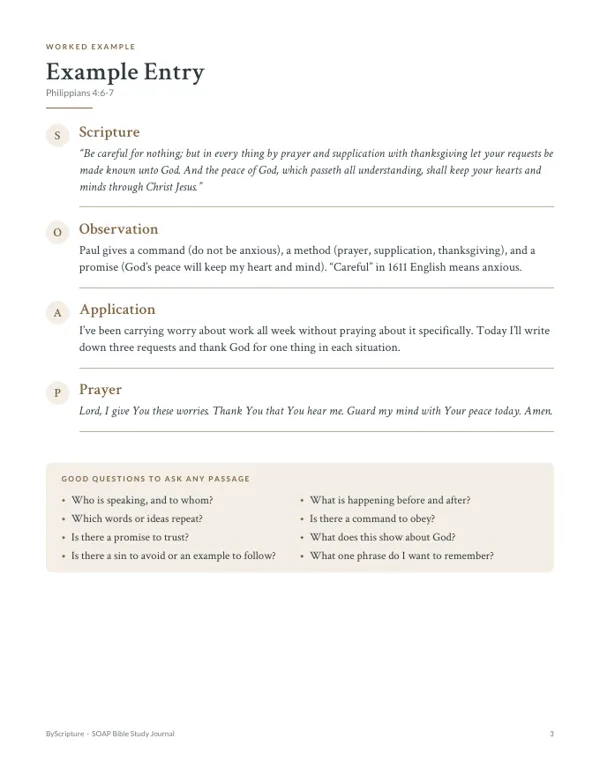
Pick one verse above and write: - Scripture: copy the verse by hand. - Observation: what does it say? Who is speaking, to whom? - Application: what does it mean for you today? - Prayer: turn it into a two-line prayer.
New to this method? See our Bible study guide or pick a Bible reading plan.
Print the free Christian Christmas coloring pages · Print the free Christmas gift tags · Memorize Matthew 1:21 with Scripture memory cards
Frequently asked questions
What is the meaning of The Holly and the Ivy?
The carol uses the holly as a picture of Christ. Its white blossom points to His purity, its red berry to His blood, its sharp prickle to the crown of thorns, its bitter bark to the gall offered at the cross, and the holly bearing the crown to Christ as King. Each verse links the plant to Jesus' birth by repeating And Mary bore sweet Jesus Christ.
What do the holly and the ivy represent?
In the carol the holly stands for Christ, and the ivy is mentioned only in passing. Some older English songs paired holly and ivy as male and female or as rivals in winter games, but the Christian carol gives the crown to the holly and uses it to tell the gospel. Evergreens in general were seen as signs of life that does not fade.
What does the rising of the sun and the running of the deer mean?
The refrain is a picture of a joyful winter morning: the sun coming up, deer running in the woods, the church organ playing and the choir singing. Many hear a play on words in the rising of the sun as the rising of the Son, Christ, who is called the Sun of righteousness in Malachi 4:2. Quire is the old spelling of choir.
How old is The Holly and the Ivy?
No one knows exactly. Songs about holly and ivy are known from the 1400s, and this carol's words were printed in several collections in the 1800s. The familiar tune was collected in Gloucestershire by Cecil Sharp and published in 1911. The words used here are from Bramley and Stainer's Christmas Carols New and Old (about 1871).
Sources: All Scripture quotations are from the King James Version (KJV), public domain in the United States. References were checked against the KJV text from bible-api.com.
Related: God Rest Ye Merry, Gentlemen · Good King Wenceslas · The First Noel · In the Bleak Midwinter · Mary, Mother of Jesus · Christmas · The Cross · The Blood of Jesus
Explore more: All Bible verses by topic · KJV Bible verses · Verse of the day · Prayers · Bible study · Bible reading plans