Were You There (When They Crucified My Lord) is an African American spiritual, likely sung by enslaved Christians in the 19th century and first printed in 1899. Each verse asks one question about Good Friday: were you there when they crucified Him, nailed Him to the cross, pierced Him in the side, or when the sun refused to shine? The answer the Bible gives is yes, in a sense: "I am crucified with Christ" (Galatians 2:20), because "he was wounded for our transgressions" (Isaiah 53:5). The words are in the public domain.
Few songs say so much with so few words. Were You There changes only one line from verse to verse, and the rest is a question and a tremble. William Eleazar Barton, who first printed it in Old Plantation Hymns in 1899, wrote that its power depends on the hold and slur on the word O and on the repeated tremble. It was sung by the Jubilee Singers in 1898, became the first spiritual to appear in a major American hymnal (the Episcopal hymnal of 1940), and was one of Mahatma Gandhi's favorite songs. Recordings range from Paul Robeson and Marian Anderson to Johnny Cash. Below are the four verses as Barton printed them, followed by the 12 KJV verses behind each scene. For the whole week, see the Holy Week timeline; for an Easter answer, see Christ the Lord Is Risen Today.
Were You There: the words
Verse 1
Were you there when they crucified my Lord? (Were you there?)
Were you there when they crucified my Lord?
O sometimes it causes me to tremble! tremble! tremble!
Were you there when they crucified my Lord?
Verse 2
Were you there when they nail'd him to the cross? (Were you there?)
Were you there when they nail'd him to the cross?
O sometimes it causes me to tremble! tremble! tremble!
Were you there when they nail'd him to the cross?
Verse 3
Were you there when they pierced him in the side? (Were you there?)
Were you there when they pierced him in the side?
O sometimes it causes me to tremble! tremble! tremble!
Were you there when they pierced him in the side?
Verse 4
Were you there when the sun refused to shine? (Were you there?)
Were you there when the sun refused to shine?
O sometimes it causes me to tremble! tremble! tremble!
Were you there when the sun refused to shine?
Words and melody: African American spiritual, first printed in William Eleazar Barton, Old Plantation Hymns (Boston, 1899), the text given here. Public domain. Many hymnals sing nailed Him to the tree and add later verses such as Were you there when they laid Him in the tomb? and, at Easter, Were you there when He rose up from the grave? Modern arrangements may be under copyright; the traditional words are not.
Were you there when they crucified my Lord?
1. Luke 23:33
"And when they were come to the place, which is called Calvary, there they crucified him, and the malefactors, one on the right hand, and the other on the left."
Luke tells the crucifixion in one plain sentence: And when they were come to the place, which is called Calvary, there they crucified him, and the malefactors, one on the right hand, and the other on the left. Calvary comes from the Latin word for skull. No Gospel writer describes the physical horror in detail; their first readers knew all too well what crucifixion meant. The spiritual does the same. It does not describe the pain. It simply asks whether you were there, and lets the question do its work.
2. John 19:17-18
"And he bearing his cross went forth into a place called the place of a skull, which is called in the Hebrew Golgotha: Where they crucified him, and two other with him, on either side one, and Jesus in the midst."
John adds that Jesus carried His own cross: And he bearing his cross went forth into a place called the place of a skull, which is called in the Hebrew Golgotha: Where they crucified him, and two other with him, on either side one, and Jesus in the midst. The first disciples were mostly not there; they had fled. A few women, the beloved disciple and Jesus' mother stood near (John 19:25-26). The song asks a question every reader must face: where would I have been that day, among the mockers, the runaways, or the few who stayed?
3. Galatians 2:20
"I am crucified with Christ: nevertheless I live; yet not I, but Christ liveth in me: and the life which I now live in the flesh I live by the faith of the Son of God, who loved me, and gave himself for me."
The deepest answer to the song's question comes from Paul, who was not physically there: I am crucified with Christ: nevertheless I live; yet not I, but Christ liveth in me. Paul believed that when Christ died, everyone who trusts in Him died with Him, and that the life he now lived was Christ's life in him. The song's tremble is the right response. The Son of God, who loved me, and gave himself for me is personal: not only for the world in general, but for me. See Bible verses about the cross.
4. Romans 6:6
"Knowing this, that our old man is crucified with him, that the body of sin might be destroyed, that henceforth we should not serve sin."
Paul explains what it means to have been there: Knowing this, that our old man is crucified with him, that the body of sin might be destroyed, that henceforth we should not serve sin. The old man is the person we were apart from Christ, ruled by sin. That self was nailed to the cross with Jesus. For the enslaved Christians who first sang this spiritual, the language of freedom from bondage was not abstract. Being there at the cross meant being set free from a deeper slavery than any human master could impose.
Were you there when they nailed Him to the cross?
5. John 20:25
"The other disciples therefore said unto him, We have seen the Lord. But he said unto them, Except I shall see in his hands the print of the nails, and put my finger into the print of the nails, and thrust my hand into his side, I will not believe."
The second verse asks, were you there when they nailed Him to the cross? The Gospels do not describe the nailing, but the risen Jesus bore its marks. Thomas, who missed Jesus' first appearance to the disciples, said: Except I shall see in his hands the print of the nails, and put my finger into the print of the nails, and thrust my hand into his side, I will not believe. Eight days later Jesus showed him those very wounds, and Thomas said, My Lord and my God (John 20:28). The nail marks became the proof of His love.
6. 1 Peter 2:24
"Who his own self bare our sins in his own body on the tree, that we, being dead to sins, should live unto righteousness: by whose stripes ye were healed."
Many hymnals sing nailed Him to the tree, and that word comes from Scripture. Peter, who was there that weekend and denied Jesus three times, later wrote: Who his own self bare our sins in his own body on the tree, that we, being dead to sins, should live unto righteousness: by whose stripes ye were healed. Peter knew the shame of not standing by Jesus. Yet he wrote that Jesus carried even that sin on the cross. The tree is the cross, recalling Deuteronomy 21:23, where one hanged on a tree is under a curse.
7. Isaiah 53:5
"But he was wounded for our transgressions, he was bruised for our iniquities: the chastisement of our peace was upon him; and with his stripes we are healed."
Seven centuries earlier, Isaiah described the Servant of the LORD suffering for others: But he was wounded for our transgressions, he was bruised for our iniquities: the chastisement of our peace was upon him; and with his stripes we are healed. Notice the words our and we. The prophet puts himself, and every reader, at the scene. That is the logic of the spiritual. We were there, because it was our sin that He carried. See Isaiah 53 meaning for the whole chapter.
8. Psalms 22:16
"For dogs have compassed me: the assembly of the wicked have inclosed me: they pierced my hands and my feet."
Psalm 22, the psalm Jesus quoted from the cross (My God, my God, why hast thou forsaken me?), describes a sufferer surrounded by enemies: For dogs have compassed me: the assembly of the wicked have inclosed me: they pierced my hands and my feet. David wrote it about a thousand years before the crucifixion, and Christians have long read it as a picture of the cross. The same psalm speaks of mockers who shake their heads and of soldiers casting lots for clothing (Psalm 22:7, 22:18). See prophecies about Jesus.
When they pierced Him in the side, when the sun refused to shine
9. John 19:34
"But one of the soldiers with a spear pierced his side, and forthwith came there out blood and water."
The third verse asks, were you there when they pierced Him in the side? After Jesus had died, the soldiers came to break the legs of the crucified men, but found Him already dead. But one of the soldiers with a spear pierced his side, and forthwith came there out blood and water. John insists that he saw this himself and that his record is true (John 19:35). The blood and water showed that Jesus truly died. Many Christians have also seen in them a picture of cleansing and new life flowing from the cross.
10. Zechariah 12:10
"And I will pour upon the house of David, and upon the inhabitants of Jerusalem, the spirit of grace and of supplications: and they shall look upon me whom they have pierced, and they shall mourn for him, as one mourneth for his only son, and shall be in bitterness for him, as one that is in bitterness for his firstborn."
John quotes this prophecy right after the piercing (John 19:37). God says through Zechariah: they shall look upon me whom they have pierced, and they shall mourn for him, as one mourneth for his only son. Notice that God says me: the One pierced is in some sense God Himself. The prophecy pairs the piercing with the spirit of grace and of supplications: looking at the One we pierced leads to grief, and grief leads to grace. That is exactly the movement of the spiritual: look, tremble, and be changed.
11. Luke 23:44-45
"And it was about the sixth hour, and there was a darkness over all the earth until the ninth hour. And the sun was darkened, and the veil of the temple was rent in the midst."
The fourth verse in Barton's text asks, were you there when the sun refused to shine? Luke records: And it was about the sixth hour, and there was a darkness over all the earth until the ninth hour. And the sun was darkened, and the veil of the temple was rent in the midst. From noon until three in the afternoon, the land went dark. The torn veil, the curtain that closed off the most holy place in the temple, showed that the way into God's presence was now open (Hebrews 10:19-20). Creation itself seemed to mourn its Maker.
12. Matthew 27:54
"Now when the centurion, and they that were with him, watching Jesus, saw the earthquake, and those things that were done, they feared greatly, saying, Truly this was the Son of God."
The song's tremble has a model in the Gospels. When the Roman officer in charge of the execution saw the darkness, the earthquake and how Jesus died, they feared greatly, saying, Truly this was the Son of God. A hardened soldier who had watched many men die was shaken to his core. The spiritual invites every singer to stand where he stood and to tremble the same way, not only with fear, but with the dawning truth of who was on the cross. See Bible verses about Good Friday.
A short prayer
Lord Jesus, I was there. It was for my sins that You were crucified, nailed to the tree and pierced in the side. Sometimes it causes me to tremble, and I am grateful that it does. Thank You that You bore my sins in Your own body, that by Your stripes I am healed, and that my old self was crucified with You. Let me never get used to the cross. Let me look on You whom we pierced and receive Your spirit of grace. Amen.
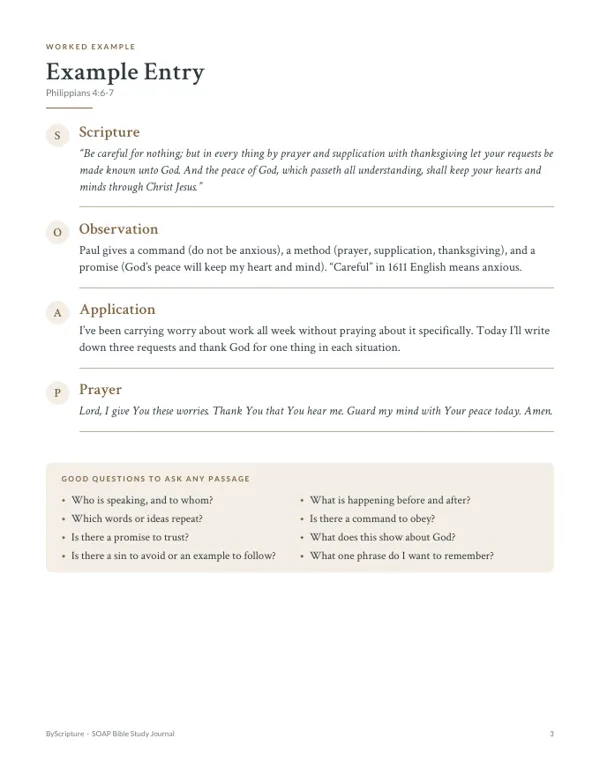
Go deeper: a SOAP study prompt
Pick one verse above and write: - Scripture: copy the verse by hand. - Observation: what does it say? Who is speaking, to whom? - Application: what does it mean for you today? - Prayer: turn it into a two-line prayer.
New to this method? See our Bible study guide or pick a Bible reading plan.
Study a Good Friday verse with the free SOAP sheet · Get the SOAP Bible Study Journal · Print free Bible verse bookmarks
Frequently asked questions
Who wrote Were You There When They Crucified My Lord?
No one knows. Were You There is an African American spiritual, probably composed by enslaved Christians in the 19th century and passed on orally. It was described in writings in the 1890s and first printed in William Eleazar Barton's Old Plantation Hymns in 1899. The Jubilee Singers sang it in 1898, and later singers such as Paul Robeson and Marian Anderson made it widely known.
Is Were You There in the public domain?
Yes. The traditional words and melody of Were You There are a 19th-century spiritual, first printed in 1899, and are in the public domain in the United States. Particular arrangements, harmonizations and recordings can be under copyright, so check the source if you print sheet music, but the words on this page are free to use.
What does the song Were You There mean?
The song asks the listener to stand at the crucifixion and feel its weight. Each verse names one moment of Good Friday and answers with trembling. Christians understand the question in two ways: none of us were there in body, but in another sense we were, because Jesus died for our sins (Isaiah 53:5) and believers are crucified with Christ (Galatians 2:20).
When is Were You There sung?
It is sung most often on Good Friday and during Holy Week, and in many churches during Lent. In some services the verses are sung one at a time between readings of the crucifixion story, such as at a Tenebrae or Seven Last Words service. Some churches add an Easter verse, Were you there when He rose up from the grave? See the Holy Week timeline.
Sources: All Scripture quotations are from the King James Version (KJV), public domain in the United States. References were checked against the KJV text from bible-api.com.
Related: Good Friday · The cross · Seven last words of Jesus · The Old Rugged Cross · Christ the Lord Is Risen Today · Isaiah 53 meaning · Holy Week timeline · Lent · Free Lent Bible Reading Plan 2027
Explore more: All Bible verses by topic · KJV Bible verses · Verse of the day · Prayers · Bible study · Bible reading plans