Christ the Lord Is Risen Today is an Easter hymn by Charles Wesley, first published in 1739 and first sung at the Foundery chapel in London. It celebrates the resurrection with an Alleluia after every line, which later editors added to fit the tune. Its lines come straight from Scripture: the angel's words, "He is not here: for he is risen, as he said" (Matthew 28:6); Jesus' cry from the cross, "It is finished" (John 19:30); and Paul's taunt, "O death, where is thy sting? O grave, where is thy victory?" (1 Corinthians 15:55). The words and tunes are in the public domain.
For many churches, Easter morning is not complete until the congregation sings Christ the Lord Is Risen Today. Charles Wesley, the younger brother of John Wesley and the most prolific hymn writer of the Methodist movement, wrote it in 1739, a year after his own conversion. It has been called the definitive Easter hymn, and it is sung today by Methodists, Anglicans, Baptists, Presbyterians, Lutherans, Catholics and many others. In churches that set aside the word Alleluia during Lent, it often returns on Easter Sunday with this hymn. Below are the six verses most often printed, followed by the 12 KJV verses behind its lines, grouped in the order of the hymn. For Good Friday, see The Old Rugged Cross and Were You There; for the chapter behind verse 3, see 1 Corinthians 15 KJV.
Christ the Lord Is Risen Today: the words
Verse 1
Christ the Lord is risen today, Alleluia!
Sons of men and angels say, Alleluia!
Raise your joys and triumphs high, Alleluia!
Sing, ye heavens, and earth, reply, Alleluia!
Verse 2
Love's redeeming work is done, Alleluia!
Fought the fight, the battle won, Alleluia!
Death in vain forbids Him rise, Alleluia!
Christ hath opened paradise, Alleluia!
Verse 3
Lives again our glorious King, Alleluia!
Where, O death, is now thy sting? Alleluia!
Once He died our souls to save, Alleluia!
Where thy victory, O grave? Alleluia!
Verse 4
Soar we now where Christ hath led, Alleluia!
Following our exalted Head, Alleluia!
Made like Him, like Him we rise, Alleluia!
Ours the cross, the grave, the skies, Alleluia!
Verse 5
Hail the Lord of earth and heaven, Alleluia!
Praise to Thee by both be given, Alleluia!
Thee we greet triumphant now, Alleluia!
Hail the Resurrection, Thou, Alleluia!
Verse 6
King of glory, soul of bliss, Alleluia!
Everlasting life is this, Alleluia!
Thee to know, Thy power to prove, Alleluia!
Thus to sing, and thus to love, Alleluia!
Words: Charles Wesley, first published in 1739 as Hymn for Easter Day in Hymns and Sacred Poems (11 stanzas), shortened by Martin Madan in 1760; the Alleluia after each line was added by later editors to fit the tune. Usual tunes: Easter Hymn (Lyra Davidica, 1708, as revised in 1749) or Llanfair (Robert Williams, 1817). Public domain. Some hymnals print Earth and heaven in chorus say in verse 1 (United Methodist Hymnal, 1989) and Where's thy victory, boasting grave in verse 3, and many leave out verses 5 and 6.
Christ the Lord is risen today (verses 1-2)
1. Matthew 28:6
"He is not here: for he is risen, as he said. Come, see the place where the Lord lay."
The hymn's first line is the Easter message in five words, and it comes from the angel at the empty tomb. Early on the first day of the week, Mary Magdalene and the other Mary came to see the grave. An angel had rolled back the stone and sat on it, and he told them: He is not here: for he is risen, as he said. Come, see the place where the Lord lay. Wesley wrote is risen today, in the present tense, as if the congregation were standing at the tomb that very morning. Hymnary lists Matthew 28:1-10 as the passage behind verse 1.
2. Luke 24:34
"Saying, The Lord is risen indeed, and hath appeared to Simon."
Sons of men and angels say: in the Gospels, both angels and people announce the resurrection. The angels said it to the women, and then the disciples said it to one another. When two disciples hurried back from Emmaus to Jerusalem, the eleven greeted them with the news: The Lord is risen indeed, and hath appeared to Simon. This verse is the source of the old Easter greeting still used in many churches: The Lord is risen! He is risen indeed! Wesley's first verse turns that greeting into a song for heaven and earth together. See Bible verses about Easter.
3. Revelation 19:6
"And I heard as it were the voice of a great multitude, and as the voice of many waters, and as the voice of mighty thunderings, saying, Alleluia: for the Lord God omnipotent reigneth."
Alleluia is the Greek spelling of the Hebrew hallelujah, praise ye the LORD. In the New Testament, the word appears only in Revelation 19, where John hears heaven's great chorus: And I heard as it were the voice of a great multitude, and as the voice of many waters, and as the voice of mighty thunderings, saying, Alleluia: for the Lord God omnipotent reigneth. The twenty-four Alleluias of the hymn are a small echo of that sound. Sing, ye heavens, and earth, reply: the church on earth answers the praise of heaven.
4. John 19:30
"When Jesus therefore had received the vinegar, he said, It is finished: and he bowed his head, and gave up the ghost."
Verse 2 begins, Love's redeeming work is done. Those words look back to Good Friday, when Jesus, just before He died, said, It is finished: and he bowed his head, and gave up the ghost. The Greek word for It is finished was used for a debt paid in full. The work of redeeming, buying back, God's people from sin was complete. Easter does not replace the cross; it shows that the cross worked. Because the payment was accepted, death could not keep the One who made it. See the seven last words of Jesus.
Death in vain forbids Him rise (verses 2-3)
5. Hebrews 2:14-15
"Forasmuch then as the children are partakers of flesh and blood, he also himself likewise took part of the same; that through death he might destroy him that had the power of death, that is, the devil; And deliver them who through fear of death were all their lifetime subject to bondage."
Fought the fight, the battle won: the Bible often describes Jesus' death and resurrection as a victory over an enemy. Hebrews explains that the Son took on flesh and blood that through death he might destroy him that had the power of death, that is, the devil; And deliver them who through fear of death were all their lifetime subject to bondage. The battle was fought on the cross and won at the empty tomb. The result is freedom for people who have lived their whole lives afraid of dying. That is why Easter hymns sound like victory songs.
6. Acts 2:24
"Whom God hath raised up, having loosed the pains of death: because it was not possible that he should be holden of it."
Death in vain forbids Him rise. On the day of Pentecost, fifty days after the resurrection, Peter preached to the crowds in Jerusalem about Jesus, Whom God hath raised up, having loosed the pains of death: because it was not possible that he should be holden of it. Death tried to hold Him, and could not. Wesley's line says the same: death forbade Him to rise, but in vain. Hymnary lists Acts 2:24 as the Scripture behind the hymn's second verse. Peter went on to quote Psalm 16:10, thou wilt not leave my soul in hell.
7. Luke 23:43
"And Jesus said unto him, Verily I say unto thee, To day shalt thou be with me in paradise."
Christ hath opened paradise. Paradise, a Persian word for a walled garden, recalls Eden, the garden that was closed when Adam and Eve were sent out with an angel guarding the way (Genesis 3:24). On the cross, Jesus promised a dying thief who asked to be remembered: Verily I say unto thee, To day shalt thou be with me in paradise. The door that sin shut, Christ opened, first for a criminal who had nothing to offer but faith. Easter shows that the promise was real: the One who made it walked out of the grave.
8. 1 Corinthians 15:55
"O death, where is thy sting? O grave, where is thy victory?"
Verse 3 quotes the Bible almost word for word: Where, O death, is now thy sting? ... Where thy victory, O grave? Paul wrote it in the Resurrection Chapter: O death, where is thy sting? O grave, where is thy victory? He was quoting and answering Hosea 13:14. A sting is what makes something deadly, and Paul says the sting of death is sin (1 Corinthians 15:56). Christ's death took the sting away, and His resurrection took away the grave's victory. The hymn sings it as a taunt. See 1 Corinthians 15 KJV.
Soar we now where Christ hath led (verses 4-6)
9. Colossians 3:1
"If ye then be risen with Christ, seek those things which are above, where Christ sitteth on the right hand of God."
Verse 4 turns from Christ to us: Soar we now where Christ hath led, Following our exalted Head. Paul writes that believers are joined to Christ, so His resurrection changes where we look: If ye then be risen with Christ, seek those things which are above, where Christ sitteth on the right hand of God. Christ is the Head and the church is His body (Colossians 1:18). Where the Head has gone, the body will follow. Easter is not only something that happened to Jesus; it is a new direction for everyone who belongs to Him.
10. 1 John 3:2
"Beloved, now are we the sons of God, and it doth not yet appear what we shall be: but we know that, when he shall appear, we shall be like him; for we shall see him as he is."
Made like Him, like Him we rise. John wrote that the full picture of our future is still hidden, but one thing is certain: Beloved, now are we the sons of God, and it doth not yet appear what we shall be: but we know that, when he shall appear, we shall be like him; for we shall see him as he is. Paul says the same: Christ will change our lowly body to be like His glorious body (Philippians 3:21). Ours the cross, the grave, the skies: believers share His cross and His grave, and they will share His rising too.
11. Philippians 2:10-11
"That at the name of Jesus every knee should bow, of things in heaven, and things in earth, and things under the earth; And that every tongue should confess that Jesus Christ is Lord, to the glory of God the Father."
Verse 5 greets the risen Christ as Lord of earth and heaven. Paul's great hymn in Philippians 2 tells how Christ humbled Himself to the death of the cross, and then God highly exalted Him, That at the name of Jesus every knee should bow, of things in heaven, and things in earth, and things under the earth; And that every tongue should confess that Jesus Christ is Lord, to the glory of God the Father. Praise to Thee by both be given: by both earth and heaven. Hymnary lists Philippians 2:10 as the verse behind this stanza.
12. John 17:3
"And this is life eternal, that they might know thee the only true God, and Jesus Christ, whom thou hast sent."
The last verse defines the life Easter brings: Everlasting life is this, Thee to know, Thy power to prove, Thus to sing, and thus to love. Wesley is echoing Jesus' prayer the night before He died: And this is life eternal, that they might know thee the only true God, and Jesus Christ, whom thou hast sent. Eternal life is not only endless time. It is knowing God, starting now. Wesley adds that such knowledge shows itself in proving His power, singing His praise and loving one another. See Bible verses about the resurrection of Jesus.
A short prayer
Lord Jesus, You are risen today. Thank You that Your redeeming work is done, that You fought the fight and won the battle, and that death could not hold You. Thank You for opening paradise to sinners like me. Take away my fear of death, because its sting is gone. Lift my eyes to the things above, where You sit at the right hand of God, and make me like You. Let me know You, prove Your power, sing Your praise and love others. Alleluia. Amen.
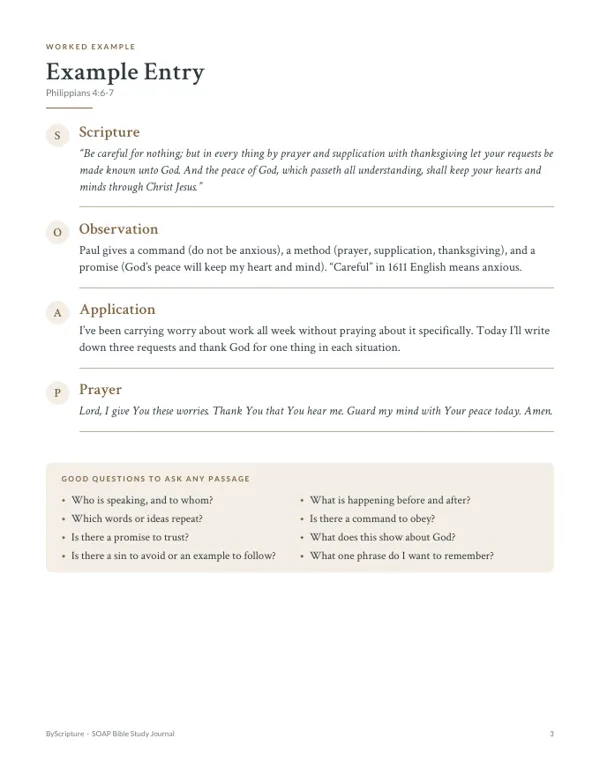
Go deeper: a SOAP study prompt
Pick one verse above and write: - Scripture: copy the verse by hand. - Observation: what does it say? Who is speaking, to whom? - Application: what does it mean for you today? - Prayer: turn it into a two-line prayer.
New to this method? See our Bible study guide or pick a Bible reading plan.
Memorize the Easter verses with Scripture memory cards · Study one verse with the free SOAP sheet · Print free Bible verse bookmarks
Frequently asked questions
Who wrote Christ the Lord Is Risen Today?
Charles Wesley (1707-1788), the English hymn writer and co-founder of Methodism, wrote the words. They were published in 1739 in Hymns and Sacred Poems under the title Hymn for Easter Day, in 11 stanzas. Martin Madan shortened and adjusted the text in 1760, and the Alleluias were added later by unknown editors to fit the tune called Easter Hymn.
Is Christ the Lord Is Risen Today in the public domain?
Yes. Charles Wesley's words date from 1739, and the common tunes, Easter Hymn (1708, revised 1749) and Llanfair (Robert Williams, 1817), are also old enough to be in the public domain. Modern arrangements, recordings and some altered texts can be under copyright, but the traditional words and melodies printed in hymnals are free to use.
What Bible verse is Christ the Lord Is Risen Today based on?
The opening verse is based on the Easter story in Matthew 28:1-10, especially the angel's words He is not here: for he is risen. Other lines quote or echo Acts 2:24, Luke 23:43, 1 Corinthians 15:55 (and Hosea 13:14), Philippians 2:10, Philippians 3:10-11 and John 17:3. The Alleluias recall Revelation 19 and the Hallelujah psalms (Psalms 111-117).
What is the difference between Christ the Lord Is Risen Today and Jesus Christ Is Risen Today?
They are two different hymns often sung to the same tune. Jesus Christ Is Risen Today is an English translation of a 14th-century Latin hymn, published in Lyra Davidica in 1708. Christ the Lord Is Risen Today is Charles Wesley's own hymn of 1739. Some hymnals combine them, printing the Latin hymn's verses with one or more of Wesley's added.
Sources: All Scripture quotations are from the King James Version (KJV), public domain in the United States. References were checked against the KJV text from bible-api.com.
Related: Easter · Resurrection of Jesus · 1 Corinthians 15 KJV · Were You There · The Old Rugged Cross · Holy Week timeline · Victory · Heaven · Free Lent Bible reading plan to Easter
Explore more: All Bible verses by topic · KJV Bible verses · Verse of the day · Prayers · Bible study · Bible reading plans