Be Thou My Vision is an old Irish prayer, Rop tú mo baile, translated by Mary Byrne in 1905 and put into English verse by Eleanor Hull in 1912. It asks God to be everything to the one who prays: vision, wisdom, father, shield, high tower, inheritance and treasure. Its spirit is that of Psalm 73:25, "Whom have I in heaven but thee? and there is none upon earth that I desire beside thee."
For centuries this prayer existed only in Irish manuscripts. Tradition links it to Saint Dallán Forgaill, a poet of the 6th century, but scholars date the surviving Irish text to around the 10th or 11th century. It belongs to a type of prayer called a lorica, a breastplate prayer, asking God to surround and protect the one who prays. In 1905 Mary Elizabeth Byrne, a scholar in Dublin, published a plain English translation, and in 1912 Eleanor Hull, founder of the Irish Texts Society, turned it into rhymed couplets. Seven years later the Church of Ireland matched the words to Slane, a folk melody named after the hill where Saint Patrick is said to have lit an Easter fire in defiance of the High King of Tara. Today it is one of the best-loved hymns in Britain, Ireland and America. The prayer has the feel of an ancient Irish clan: God is the chieftain, the High King, the shield in battle and the high tower of refuge. Yet its center is personal and tender: Heart of my own heart. Below is Hull's full 1912 text, including the stanza most hymnals leave out, and the 12 KJV passages behind its lines.
Be Thou My Vision: the words
Verse 1
Be Thou my Vision, O Lord of my heart,
Naught is all else to me, save that Thou art.
Thou my best thought by day and by night,
Waking or sleeping, Thy presence my light.
Verse 2
Be Thou my Wisdom, Thou my true Word;
I ever with Thee, Thou with me, Lord.
Thou my great Father, I thy dear son;
Thou in me dwelling, I with Thee one.
Verse 3
Be Thou my battle-shield, sword for the fight,
Be Thou my dignity, Thou my delight.
Thou my soul's shelter, Thou my high tower;
Raise Thou me heavenward, Power of my power.
Verse 4
Riches I heed not or man's empty praise,
Thou mine inheritance now and always.
Thou, and Thou only, first in my heart,
High King of Heaven, my treasure Thou art.
Verse 5
King of the seven heavens, grant me for dole,
Thy love in my heart, Thy light in my soul.
Thy light from my soul, Thy love from my heart,
King of the seven heavens, may they never depart.
Verse 6
With the High King of heaven, after victory won,
May I reach heaven's joys, O Bright heaven's Sun!
Heart of my own heart, whatever befall,
Still be my Vision, O Ruler of all.
Words: an Old Irish prayer, Rop tú mo baile, often attributed to Saint Dallán Forgaill (6th century) but dated by scholars to about the 10th or 11th century. Translated into English prose by Mary Elizabeth Byrne in the journal Ériu (1905), and put into verse by Eleanor Hull under the title A Prayer in The Poem-Book of the Gael (London, 1912), pages 119-120 (Internet Archive scan); checked against the Wikipedia transcription. Public domain. Hymnals usually print stanzas 1-4 and 6, with small changes (for example, Naught be all else to me, and I Thy true son). Tune: Slane, a traditional Irish melody, first paired with the words in the Irish Church Hymnal of 1919.
Be Thou my Vision: Lord of my heart
1. Psalms 73:25
"Whom have I in heaven but thee? and there is none upon earth that I desire beside thee."
Naught is all else to me, save that Thou art. Naught means nothing. The line says that nothing else matters compared with God Himself. Asaph, who wrote Psalm 73, nearly lost his faith envying the wealthy and the proud, until he went into the sanctuary of God and saw things clearly. He ended with this: Whom have I in heaven but thee? and there is none upon earth that I desire beside thee. That is the heart of Be Thou My Vision. It is not a prayer for things from God. It is a prayer for God.
2. Proverbs 29:18
"Where there is no vision, the people perish: but he that keepeth the law, happy is he."
Be Thou my Vision. In Hebrew, the vision of this proverb is the revelation God gives through His prophets: Where there is no vision, the people perish: but he that keepeth the law, happy is he. The Irish prayer uses vision in a similar way. It is not asking for dreams or plans. It asks God to be what we see by, the light that shows everything else as it really is. When God is our vision, we see our lives, our troubles and other people through His eyes.
3. Psalms 63:6
"When I remember thee upon my bed, and meditate on thee in the night watches."
Thou my best thought by day and by night, waking or sleeping, Thy presence my light. David wrote Psalm 63 in the wilderness of Judah, far from home, and he still found God in the dark: When I remember thee upon my bed, and meditate on thee in the night watches. Night watches were the shifts of the night, the hours when the mind wanders and worries. The prayer asks that God would be the first thought in the morning and the last at night, and the steady light in between.
4. 1 Corinthians 1:30
"But of him are ye in Christ Jesus, who of God is made unto us wisdom, and righteousness, and sanctification, and redemption:"
Be Thou my Wisdom, Thou my true Word. Paul tells the Corinthians, who prized clever speakers and philosophers, that true wisdom is a person: But of him are ye in Christ Jesus, who of God is made unto us wisdom, and righteousness, and sanctification, and redemption. The phrase true Word points to John 1:1, where Jesus is the Word who was with God and was God. The prayer does not ask to become wise apart from Christ. It asks Christ to be our wisdom.
Thou my great Father: battle-shield and high tower
5. 2 Corinthians 6:18
"And will be a Father unto you, and ye shall be my sons and daughters, saith the Lord Almighty."
Thou my great Father, I thy dear son. Hull's 1912 text says dear son; many hymnals say true son, and some modern versions say child to include every reader. The promise behind the line is the same: And will be a Father unto you, and ye shall be my sons and daughters, saith the Lord Almighty. The Lord Almighty, the High King of the hymn, is also a Father. The old Irish poet could call God his chieftain and his father in the same breath, and so can we.
6. John 17:21
"That they all may be one; as thou, Father, art in me, and I in thee, that they also may be one in us: that the world may believe that thou hast sent me."
I ever with Thee, Thou with me, Lord; Thou in me dwelling, I with Thee one. These lines sound like the prayer Jesus prayed for His followers the night before the cross: That they all may be one; as thou, Father, art in me, and I in thee, that they also may be one in us. Christianity is not only following rules or admiring a teacher from a distance. It is union with God through Christ, God dwelling in us by His Spirit and we dwelling in Him. That is what Heart of my own heart means.
7. 1 Thessalonians 5:8
"But let us, who are of the day, be sober, putting on the breastplate of faith and love; and for an helmet, the hope of salvation."
Be Thou my battle-shield, sword for the fight. This is the lorica, the breastplate prayer, coming through. Early Irish Christians lived among clan wars, and they borrowed the language of armor from Paul: putting on the breastplate of faith and love; and for an helmet, the hope of salvation. Paul also names the shield of faith and the sword of the Spirit (Ephesians 6:16-17). The prayer asks God to be the armor Himself. Our protection is not a technique; it is a Person.
8. Psalms 18:2
"The LORD is my rock, and my fortress, and my deliverer; my God, my strength, in whom I will trust; my buckler, and the horn of my salvation, and my high tower."
Thou my soul's shelter, Thou my high tower. A high tower was a fortified place on a hill, out of reach of the enemy. David, who spent years running from King Saul, piled up these names for God: The LORD is my rock, and my fortress, and my deliverer; my God, my strength, in whom I will trust; my buckler, and the horn of my salvation, and my high tower. A buckler is a small shield. When life feels exposed and dangerous, God is the place we run to.
Thou mine inheritance: High King of Heaven, my treasure
9. John 12:43
"For they loved the praise of men more than the praise of God."
Riches I heed not or man's empty praise. John describes some leaders who believed in Jesus but kept quiet for fear of being thrown out of the synagogue: For they loved the praise of men more than the praise of God. Human praise is empty because it changes with the mood of the crowd. The prayer asks for freedom from caring too much about money and reputation, so that the only approval we live for is God's.
10. Psalms 16:5
"The LORD is the portion of mine inheritance and of my cup: thou maintainest my lot."
Thou mine inheritance now and always. In ancient Israel every tribe received land as its inheritance, except the priests of Levi. God told them, I am thy part and thine inheritance (Numbers 18:20). David claims that same gift for himself: The LORD is the portion of mine inheritance and of my cup: thou maintainest my lot. An inheritance is what you receive, not what you earn. To have God as our inheritance means that whatever else we gain or lose, we already have the best thing.
11. Matthew 13:44
"Again, the kingdom of heaven is like unto treasure hid in a field; the which when a man hath found, he hideth, and for joy thereof goeth and selleth all that he hath, and buyeth that field."
High King of Heaven, my treasure Thou art. Jesus told a short parable about a man who stumbled on buried treasure: and for joy thereof goeth and selleth all that he hath, and buyeth that field. He was not grudging about what he gave up; he was glad. Be Thou My Vision has the same joyful logic. Riches and praise are let go not because they are evil, but because something far better has been found.
12. Malachi 4:2
"But unto you that fear my name shall the Sun of righteousness arise with healing in his wings; and ye shall go forth, and grow up as calves of the stall."
May I reach heaven's joys, O Bright heaven's Sun! The last stanza looks to the end of the journey, after victory won. Malachi promised a sunrise: But unto you that fear my name shall the Sun of righteousness arise with healing in his wings. Christians have long seen this as a picture of Christ. The prayer that began with Be Thou my Vision ends in the light of that Sun, the place where we will see Him face to face (1 Corinthians 13:12) and need no other vision.
A short prayer
Lord of my heart, be my vision. Let nothing else matter to me as much as You do. Be my first thought in the morning and my last at night. Be my wisdom, my Father, my shield and my high tower. Free me from the love of riches and from living for the praise of people. You are my inheritance and my treasure. Whatever happens today, keep me close to You, Heart of my own heart, until I reach heaven's joys and see You, the bright Sun of righteousness, face to face. Amen.
Go deeper: a SOAP study prompt
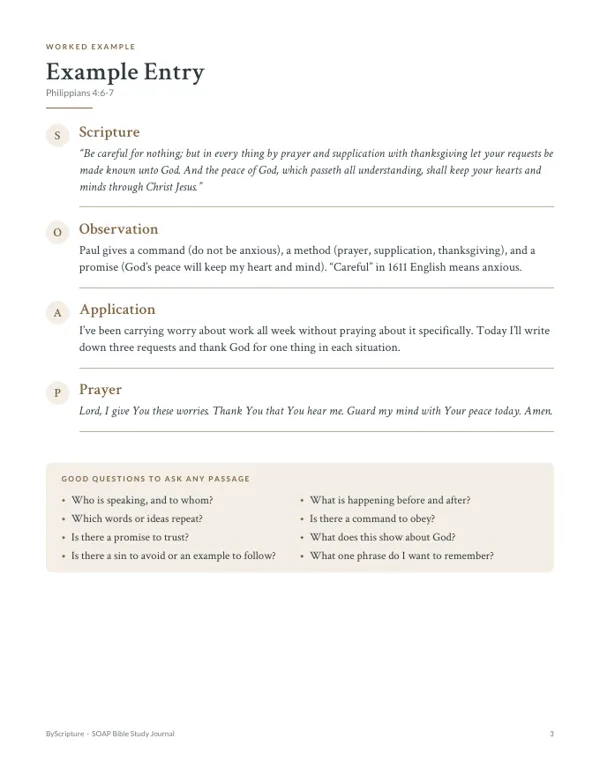
Pick one verse above and write: - Scripture: copy the verse by hand. - Observation: what does it say? Who is speaking, to whom? - Application: what does it mean for you today? - Prayer: turn it into a two-line prayer.
New to this method? See our Bible study guide or pick a Bible reading plan.
Memorize Psalm 73:25 with Scripture memory cards · Pray on the armor of God with the free printable · Set your vision for the year with the free New Year Scripture plan
Frequently asked questions
Who wrote Be Thou My Vision?
The words come from an Old Irish prayer, Rop tú mo baile, traditionally linked to Saint Dallán Forgaill in the 6th century, though the surviving text is probably from the 10th or 11th century. Mary Elizabeth Byrne translated it into English prose in 1905, and Eleanor Hull put it into rhymed verse in 1912. The tune, Slane, is a traditional Irish folk melody that was first used for the hymn in 1919.
Is Be Thou My Vision in the public domain?
Yes. The Irish original is medieval, and Byrne's 1905 translation and Hull's 1912 verse were both published before 1929, so they are public domain in the United States. The Slane melody is traditional. Many newer hymnal texts and modern worship arrangements change words or add bridges, and those changes may be under copyright.
What does Be Thou my Vision mean?
It is a prayer that God would be what we see by and what we look at, the light and focus of our whole life. It asks God to fill every part of life: thoughts, wisdom, family, protection and treasure. In Bible terms it is close to Psalm 73:25 (none upon earth that I desire beside thee) and Matthew 6:22, where Jesus says the light of the body is the eye.
Why do some versions say High King of Heaven, my victory won?
Hull's 1912 text reads With the High King of heaven, after victory won, May I reach heaven's joys. Later hymnals shortened it to High King of Heaven, my victory won, which suggests that Christ has already won the victory for us. Both are biblical: Christ gives us the victory (1 Corinthians 15:57), and we look forward to reaching heaven's joys at the end of the race (2 Timothy 4:7-8).
Sources: All Scripture quotations are from the King James Version (KJV), public domain in the United States. References were checked against the KJV text from bible-api.com.
Related: Vision · Psalm 27 meaning · Armor of God printable · Protection · Holy, Holy, Holy · Amazing Grace · Worship · Commitment
Explore more: All Bible verses by topic · KJV Bible verses · Verse of the day · Prayers · Bible study · Bible reading plans