Silent Night is a Christmas carol written in German as Stille Nacht by Joseph Mohr, a young Austrian priest, in 1816, and set to music by Franz Xaver Gruber. It was first sung on Christmas Eve 1818 in Oberndorf, near Salzburg. The English words most people sing were translated by John Freeman Young in 1859. The carol retells Luke 2, where shepherds watched their flocks by night and the angel announced, "For unto you is born this day in the city of David a Saviour, which is Christ the Lord" (Luke 2:11). The words and tune are in the public domain.
Silent Night may be the most widely sung Christmas carol in the world. It has been translated into hundreds of languages, sung by candlelight in countless Christmas Eve services, and famously sung across the trenches by soldiers during the Christmas truce of 1914. Austria added it to its national list of intangible cultural heritage in 2011. Its power is its stillness: a sleeping baby, a watching mother, frightened shepherds, and the first light of a new dawn of grace. Below are the three English verses as usually sung, the story of how the carol began, and 12 KJV verses behind its words, verse by verse. For the whole story, read the Christmas story in the Bible; for another favorite, see O Little Town of Bethlehem.
Silent Night: the words
Verse 1
Silent night! Holy night!
All is calm, all is bright
Round yon virgin mother and child!
Holy infant, so tender and mild,
Sleep in heavenly peace!
Sleep in heavenly peace!
Verse 2
Silent night! Holy night!
Shepherds quake at the sight!
Glories stream from heaven afar,
Heavenly hosts sing Alleluia!
Christ the Saviour is born!
Christ the Saviour is born!
Verse 3
Silent night! Holy night!
Son of God, love's pure light
Radiant beams from Thy holy face
With the dawn of redeeming grace,
Jesus, Lord, at Thy birth!
Jesus, Lord, at Thy birth!
Words: Joseph Mohr, Stille Nacht, heilige Nacht (German, written 1816, six stanzas); English translation of three stanzas by John Freeman Young, published in 1859. Tune: Stille Nacht by Franz Xaver Gruber (1818). Public domain. Hymnals order the verses differently, and some modern books print Christ the Savior or add a later stanza that begins with wondrous star, lend thy light.
All is calm, all is bright (verse 1)
1. Luke 2:5
"To be taxed with Mary his espoused wife, being great with child."
Round yon virgin mother and child. Luke introduces Mary on the road to Bethlehem with Joseph, who went To be taxed with Mary his espoused wife, being great with child. Espoused means betrothed, legally bound but not yet living together as husband and wife. Matthew adds that Joseph took her as his wife and knew her not until she had brought forth her firstborn son (Matthew 1:25). Silent Night calls her the virgin mother because the Gospels do: the child was conceived by the Holy Spirit (Luke 1:35). The first verse is a picture of that mother and her newborn son, at rest after a long journey.
2. Luke 2:8
"And there were in the same country shepherds abiding in the field, keeping watch over their flock by night."
The night in Silent Night is the night of the shepherds. Luke sets the scene: And there were in the same country shepherds abiding in the field, keeping watch over their flock by night. Shepherds were working men, often looked down on, and they were the only ones awake. The town slept, but they were watching, and they were the first to hear the news. Silent Night was first sung in Oberndorf, a village of boatmen and laborers on the Salzach River, people much like those shepherds. God still loves to bring His good news to ordinary people doing ordinary work.
3. Matthew 11:29
"Take my yoke upon you, and learn of me; for I am meek and lowly in heart: and ye shall find rest unto your souls."
Holy infant, so tender and mild. The gentleness of the baby in the manger matches the gentleness Jesus showed all His life. Inviting the weary to come to Him, He described Himself this way: Take my yoke upon you, and learn of me; for I am meek and lowly in heart: and ye shall find rest unto your souls. Meek does not mean weak. It means strength that is gentle with others. The Son of God came as a baby who could be held, and He grew into a Savior who still welcomes the weary. See Matthew 11:28-30 meaning.
4. Psalms 4:8
"I will both lay me down in peace, and sleep: for thou, LORD, only makest me dwell in safety."
Sleep in heavenly peace. The first verse ends like a lullaby, and the Bible has its own bedtime verse. David wrote it in a time of trouble: I will both lay me down in peace, and sleep: for thou, LORD, only makest me dwell in safety. Peace in the Bible is not just quiet. It is safety and wholeness that come from God. The baby in Bethlehem slept in a dangerous world, under a cruel king, yet in His Father's care. Many families sing Silent Night as a prayer over sleeping children on Christmas Eve. See Bible verses about peace.
Shepherds quake at the sight (verse 2)
5. Luke 2:9
"And, lo, the angel of the Lord came upon them, and the glory of the Lord shone round about them: and they were sore afraid."
Shepherds quake at the sight! Verse 2 breaks the calm. Luke says the night sky suddenly blazed: And, lo, the angel of the Lord came upon them, and the glory of the Lord shone round about them: and they were sore afraid. Sore afraid means terrified. The glory of the Lord was the bright presence of God that once filled the tabernacle and the temple. Now it shone on a hillside over common shepherds. Glories stream from heaven afar is Young's English for that moment. The angel's first words were Fear not, because the news was good. See Bible verses about angels.
6. Luke 2:11
"For unto you is born this day in the city of David a Saviour, which is Christ the Lord."
Christ the Saviour is born! This line is the angel's announcement almost word for word: For unto you is born this day in the city of David a Saviour, which is Christ the Lord. Each title matters. Saviour means rescuer. Christ is the Greek form of Messiah, the anointed King promised to David's family. Lord is the name used for God Himself in the Greek Old Testament. Born this day is the reason Christmas is a day of joy: the Savior is not only promised any more. He has come. The carol repeats the line twice, as the shepherds must have repeated it all the way to Bethlehem.
7. Luke 2:20
"And the shepherds returned, glorifying and praising God for all the things that they had heard and seen, as it was told unto them."
After they had found the baby, just as the angel said, the shepherds did not stay silent. And the shepherds returned, glorifying and praising God for all the things that they had heard and seen, as it was told unto them. They went back to the same fields and the same sheep, but they were not the same men. The heavenly hosts sang Alleluia, and then the shepherds took up the song. Silent Night begins in stillness and ends in praise, and the shepherds show that is the right order: we come quietly, and we leave singing. See Bible verses about worship.
8. Matthew 1:21
"And she shall bring forth a son, and thou shalt call his name JESUS: for he shall save his people from their sins."
The name Jesus, sung in the last line of verse 3, was chosen in heaven before the child was born. The angel told Joseph in a dream: And she shall bring forth a son, and thou shalt call his name JESUS: for he shall save his people from their sins. Jesus is the Greek form of Joshua, which means the LORD saves. The Saviour of verse 2 is the meaning of the name in verse 3. He came to save His people from their sins, not only from their troubles, and that is why His birth is the dawn of redeeming grace. See names of Jesus.
Son of God, love's pure light (verse 3)
9. 1 John 4:9
"In this was manifested the love of God toward us, because that God sent his only begotten Son into the world, that we might live through him."
Son of God, love's pure light. John explains Christmas in one sentence: In this was manifested the love of God toward us, because that God sent his only begotten Son into the world, that we might live through him. Manifested means made visible. Before Bethlehem, people could hear about God's love. In the manger they could see it. Love's pure light is a good name for the baby, because He is God's love shining in a human face. And the purpose was not only to be admired: He came so that we might live through Him. See Bible verses about God's love.
10. 2 Corinthians 4:6
"For God, who commanded the light to shine out of darkness, hath shined in our hearts, to give the light of the knowledge of the glory of God in the face of Jesus Christ."
Radiant beams from Thy holy face. Paul compares the light of salvation to the first light of creation: For God, who commanded the light to shine out of darkness, hath shined in our hearts, to give the light of the knowledge of the glory of God in the face of Jesus Christ. The glory that shone around the shepherds is seen most clearly in the face of Jesus. Mohr's holy face and Young's radiant beams point to this verse: to know what God is like, look at Christ. The light that shone in the stable can shine in a human heart.
11. Luke 1:78-79
"Through the tender mercy of our God; whereby the dayspring from on high hath visited us, To give light to them that sit in darkness and in the shadow of death, to guide our feet into the way of peace."
With the dawn of redeeming grace. Before Jesus was born, Zechariah, the father of John the Baptist, sang that God was about to send the sunrise: Through the tender mercy of our God; whereby the dayspring from on high hath visited us, To give light to them that sit in darkness and in the shadow of death, to guide our feet into the way of peace. Dayspring means dawn. The night of Silent Night is not the end of the story; it is the last darkness before morning. The baby is the first light of a new day of grace and peace.
12. John 1:9
"That was the true Light, which lighteth every man that cometh into the world."
Jesus, Lord, at Thy birth. The carol ends by naming the baby as Lord. John's Gospel says the same light that came at Christmas is meant for everyone: That was the true Light, which lighteth every man that cometh into the world. True means real, the genuine light compared to every lesser light. Silent Night has spread to every continent and nearly every language, which is a small sign of this verse coming true. The light first seen in a quiet Bethlehem night is offered to every person who will receive Him (John 1:12). See Bible verses about light.
A short prayer
Lord Jesus, on this silent and holy night I come to You quietly. Thank You for coming as a holy infant, tender and mild, and for bringing heavenly peace into a troubled world. Like the shepherds, I have heard the good news: a Savior is born, Christ the Lord. Let the light of Your face shine in my heart, and let the dawn of Your redeeming grace reach every dark place in my life. Help me to leave this night glorifying and praising God. Jesus, Lord, at Your birth, I worship You. Amen.
Go deeper: a SOAP study prompt
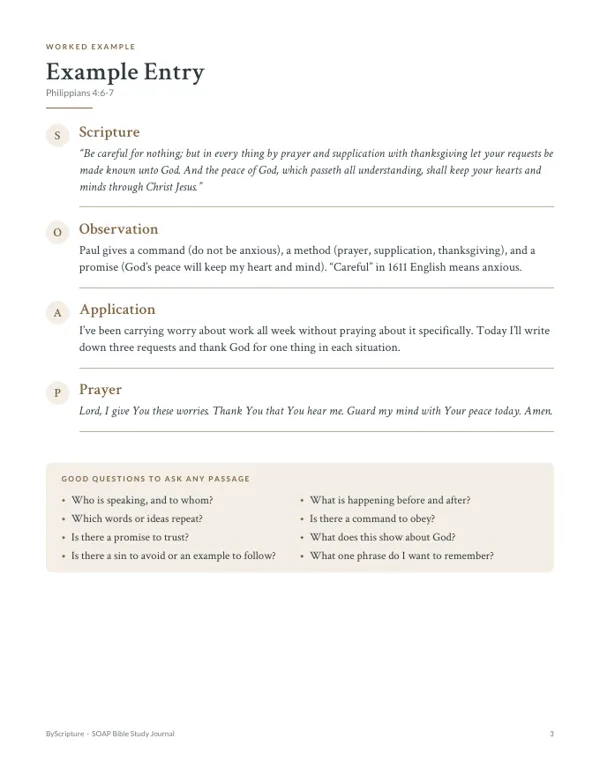
Pick one verse above and write: - Scripture: copy the verse by hand. - Observation: what does it say? Who is speaking, to whom? - Application: what does it mean for you today? - Prayer: turn it into a two-line prayer.
New to this method? See our Bible study guide or pick a Bible reading plan.
Print the free Advent candle readings · Print free Christmas Bible verse printables · Memorize Luke 2 with Scripture memory cards
Frequently asked questions
Who wrote Silent Night?
Joseph Mohr (1792-1848), an assistant priest in Austria, wrote the German poem Stille Nacht in 1816 in Mariapfarr. Two years later, at St. Nicholas Church in Oberndorf near Salzburg, he asked the schoolteacher and organist Franz Xaver Gruber (1787-1863) to set it to music. They sang it together for the first time at the Christmas Eve service in 1818.
Who translated Silent Night into English?
The English words most churches sing were translated by John Freeman Young, an Episcopal priest serving at Trinity Church in New York City, and published in 1859. Mohr's poem has six stanzas, and Young translated three of them. Other English translations exist, including a 1998 version by Bettina Klein commissioned by the Silent Night Museum in Salzburg.
Is Silent Night in the public domain?
Yes. Mohr's German words (1816), Gruber's melody (1818) and John Freeman Young's English translation (1859) are all in the public domain. Newer translations, arrangements and recordings may be under copyright, but the traditional English words and the familiar tune can be freely sung, printed and shared.
What Bible passage is Silent Night based on?
Silent Night is based on Luke 2:1-20, the birth of Jesus in Bethlehem and the angels' announcement to the shepherds. The second verse follows Luke 2:8-14 closely, and Christ the Saviour is born echoes Luke 2:11. The third verse, about love's pure light and the dawn of redeeming grace, echoes John 1:9, 2 Corinthians 4:6 and Luke 1:78-79.
Sources: All Scripture quotations are from the King James Version (KJV), public domain in the United States. References were checked against the KJV text from bible-api.com.
Related: Christmas · The Christmas story in the Bible · Away in a Manger · O Little Town of Bethlehem · Hark the Herald Angels Sing · Peace · Light · Christmas prayer
Explore more: All Bible verses by topic · KJV Bible verses · Verse of the day · Prayers · Bible study · Bible reading plans