What a Friend We Have in Jesus is a hymn about prayer by Joseph M. Scriven, an Irish-born teacher who lived in Ontario, Canada. He wrote it about 1855 as a poem to comfort his mother, and it was printed without his name before Charles Converse set it to music in 1868. Its message is that Jesus is the friend "that sticketh closer than a brother" (Proverbs 18:24), so we can take everything to Him in prayer.
Joseph Medlicott Scriven (1819-1886) was born in Ireland and studied at Trinity College, Dublin. His life was marked by grief. The young woman he planned to marry drowned shortly before their wedding, and after he moved to Canada a second engagement ended when his fiancée fell ill and died. Scriven settled near Port Hope, Ontario, where he lived simply, tutored children and was known for helping poor neighbors, often cutting firewood for widows who could not pay. When he heard that his mother in Ireland was going through a hard time, he sent her a poem. He never meant it to be published, and for years it was printed without his name. Asked about it later, he is reported to have said that he and the Lord did it between them. The American lawyer and composer Charles Crozat Converse gave it its tune in 1868, and it has been sung around the world ever since, in Japan and Korea as well as in English-speaking churches. The hymn is simple on purpose. It says one thing three times: whatever the burden, take it to the Lord in prayer. Below are Scriven's three stanzas and the 12 KJV passages behind them.
What a Friend We Have in Jesus: the words
Verse 1
What a Friend we have in Jesus,
All our sins and griefs to bear!
What a privilege to carry
Everything to God in prayer!
Oh, what peace we often forfeit,
Oh, what needless pain we bear,
All because we do not carry
Everything to God in prayer.
Verse 2
Have we trials and temptations?
Is there trouble anywhere?
We should never be discouraged,
Take it to the Lord in prayer.
Can we find a Friend so faithful,
Who will all our sorrows share?
Jesus knows our every weakness,
Take it to the Lord in prayer.
Verse 3
Are we weak and heavy laden,
Cumbered with a load of care?
Precious Saviour, still our refuge,
Take it to the Lord in prayer.
Do thy friends despise, forsake thee?
Take it to the Lord in prayer:
In His arms He'll take and shield thee,
Thou wilt find a solace there.
Words: Joseph M. Scriven, written about 1855 as a poem for his mother in Ireland and first printed without his name; it appeared in Horace L. Hastings's Social Hymns, Original and Selected (1865) and, with Charles C. Converse's tune (1868), in the Sunday-school songbook Silver Wings (1870) (Internet Archive scan). Text as printed in The Army and Navy Hymnal (Wikisource), with needless joined as one word. Public domain. The tune is called Erie or Converse.
What a Friend: our sins and griefs to bear
1. Proverbs 18:24
"A man that hath friends must shew himself friendly: and there is a friend that sticketh closer than a brother."
What a Friend we have in Jesus. Solomon says: A man that hath friends must shew himself friendly: and there is a friend that sticketh closer than a brother. Christians have long heard Jesus in the second half of that verse. Scriven had lost the people closest to him, and he knew how lonely life could be. His hymn does not deny the pain of losing human friends; it points to the one Friend who cannot be lost. Jesus Himself said to His disciples, I have called you friends (John 15:15).
2. Isaiah 53:4
"Surely he hath borne our griefs, and carried our sorrows: yet we did esteem him stricken, smitten of God, and afflicted."
All our sins and griefs to bear. The first lines of the hymn echo Isaiah's song of the suffering Servant: Surely he hath borne our griefs, and carried our sorrows. Scriven puts sins and griefs side by side. Jesus carried our sins on the cross, and He also carries the sorrows of His people every day. Matthew quotes this verse when Jesus healed the sick in Capernaum (Matthew 8:17). The Friend who died for our sins is the same Friend who listens to our grief.
3. Hebrews 4:16
"Let us therefore come boldly unto the throne of grace, that we may obtain mercy, and find grace to help in time of need."
What a privilege to carry everything to God in prayer. A privilege is a right that not everyone has. In the ancient world, ordinary people could not walk into a king's throne room. Hebrews says believers can come before God's throne any time: Let us therefore come boldly unto the throne of grace, that we may obtain mercy, and find grace to help in time of need. Boldly does not mean carelessly. It means with confidence, because Jesus our high priest has gone ahead of us and understands us.
4. James 4:2
"Ye lust, and have not: ye kill, and desire to have, and cannot obtain: ye fight and war, yet ye have not, because ye ask not."
Oh, what peace we often forfeit, oh, what needless pain we bear, all because we do not carry everything to God in prayer. James puts the same point more bluntly: ye fight and war, yet ye have not, because ye ask not. Many people worry, scheme and struggle on their own, and only pray as a last resort. Scriven's gentle line is a rebuke and an invitation at once. Peace is on offer; we lose it when we keep our burdens to ourselves.
Trials and temptations: take it to the Lord
5. 1 Corinthians 10:13
"There hath no temptation taken you but such as is common to man: but God is faithful, who will not suffer you to be tempted above that ye are able; but will with the temptation also make a way to escape, that ye may be able to bear it."
Have we trials and temptations? Paul writes to a church tempted on every side: There hath no temptation taken you but such as is common to man: but God is faithful, who will not suffer you to be tempted above that ye are able; but will with the temptation also make a way to escape, that ye may be able to bear it. You are not the only one, and you are not without help. Prayer is often the first step on the way of escape God provides.
6. Luke 18:1
"And he spake a parable unto them to this end, that men ought always to pray, and not to faint;"
We should never be discouraged. Jesus told the parable of the widow who kept coming to an unjust judge until he gave her justice, and Luke tells us why: that men ought always to pray, and not to faint. To faint here means to lose heart and give up. If even an unjust judge will finally listen, how much more will a loving Father hear His children? Scriven's word discouraged is the same idea. Keep praying, even when the answer seems slow.
7. Psalms 103:14
"For he knoweth our frame; he remembereth that we are dust."
Jesus knows our every weakness. David reminds us that God is not surprised by our frailty: For he knoweth our frame; he remembereth that we are dust. God does not expect us to be stronger than we are. Jesus was tempted in every way we are, yet without sin (Hebrews 4:15), so He understands weakness from the inside. That is why we can bring Him our weakness without shame. He made us, He knows us, and He pities us as a father pities his children (Psalm 103:13).
8. 1 Thessalonians 5:17
"Pray without ceasing."
Take it to the Lord in prayer. The refrain line returns six times in the hymn, and it rests on one of the shortest verses in the Bible: Pray without ceasing. Paul does not mean we should do nothing but pray. He means a steady habit of turning to God through the day, about small things as well as large. Scriven's word everything matters. There is no burden too small to mention and no trouble too big to bring.
Weak and heavy laden: still our refuge
9. Matthew 11:28
"Come unto me, all ye that labour and are heavy laden, and I will give you rest."
Are we weak and heavy laden? Scriven took the phrase heavy laden from the invitation of Jesus: Come unto me, all ye that labour and are heavy laden, and I will give you rest. Cumbered, in the next line, means weighed down and hindered, like Martha, who was cumbered about much serving (Luke 10:40). Jesus does not tell tired people to try harder. He tells them to come. Prayer is how we take Him up on that invitation.
10. Psalms 27:10
"When my father and my mother forsake me, then the LORD will take me up."
Do thy friends despise, forsake thee? Take it to the Lord in prayer. David knew rejection, from King Saul, from his own son Absalom and from his closest counselor. He wrote: When my father and my mother forsake me, then the LORD will take me up. Even the people who should love us most may fail us. Scriven, who lived much of his life alone and was sometimes misunderstood by his neighbors, wrote from experience. The Lord does not forsake those who come to Him.
11. Isaiah 40:11
"He shall feed his flock like a shepherd: he shall gather the lambs with his arm, and carry them in his bosom, and shall gently lead those that are with young."
In His arms He'll take and shield thee. Isaiah pictures God as a shepherd: he shall gather the lambs with his arm, and carry them in his bosom, and shall gently lead those that are with young. The image is tender. A shepherd carries the weakest lambs close to his chest. Jesus called Himself the good shepherd who gives His life for the sheep (John 10:11). The arms that carry us in prayer are the arms that were stretched out on the cross.
12. Psalms 62:8
"Trust in him at all times; ye people, pour out your heart before him: God is a refuge for us. Selah."
Precious Saviour, still our refuge; thou wilt find a solace there. A refuge is a safe place to run to, and solace is comfort in sorrow. David says: Trust in him at all times; ye people, pour out your heart before him: God is a refuge for us. Selah. Pour out your heart means to hold nothing back. You do not need polished words. Tell God what is wrong, as honestly as you would tell your closest friend, and let Him be your refuge.
A short prayer
Lord Jesus, what a Friend You are. Thank You for bearing my sins and my griefs, and for the privilege of bringing everything to You in prayer. Forgive me for the peace I have lost by carrying my burdens alone. When trials and temptations come, keep me from discouragement. You know my every weakness, and You do not turn me away. When friends fail me, take me in Your arms and shield me. I pour out my heart before You now, and I trust You to be my refuge and my solace. Amen.
Go deeper: a SOAP study prompt
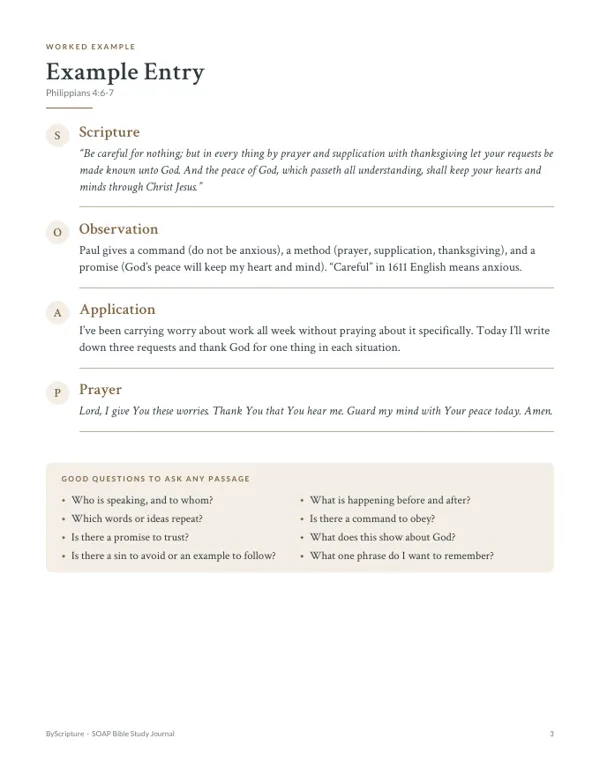
Pick one verse above and write: - Scripture: copy the verse by hand. - Observation: what does it say? Who is speaking, to whom? - Application: what does it mean for you today? - Prayer: turn it into a two-line prayer.
New to this method? See our Bible study guide or pick a Bible reading plan.
Start the 30-day prayer journal · Try the free printable prayer journal pages · Memorize Hebrews 4:16 with Scripture memory cards
Frequently asked questions
Who wrote What a Friend We Have in Jesus?
Joseph Medlicott Scriven (1819-1886), an Irish-born teacher who emigrated to Canada and lived near Port Hope, Ontario, wrote the words about 1855 to comfort his mother. The poem was printed without his name for some years. The music was composed in 1868 by Charles Crozat Converse, an American lawyer and composer; the tune is called Erie or Converse.
Is What a Friend We Have in Jesus in the public domain?
Yes. Scriven's words date from about 1855 and were printed by 1865, and Converse's tune from 1868, so the traditional hymn is in the public domain in the United States. Modern arrangements with added choruses or rewritten lines may be under copyright, so check before you print a recent version.
What is the story behind What a Friend We Have in Jesus?
Scriven's life was full of loss. His first fiancée drowned shortly before their wedding in Ireland, and after he moved to Canada a second fiancée died of illness before they could marry. He lived simply and gave much of his time to helping the poor. When his mother faced a hard time in Ireland, he wrote this poem for her. It was only years later that people near Port Hope learned he had written it.
What Bible verse is What a Friend We Have in Jesus based on?
The hymn does not follow one passage, but its key ideas come from Proverbs 18:24 (a friend that sticketh closer than a brother), John 15:15 (Jesus calls His disciples friends), Philippians 4:6 (in every thing by prayer and supplication), Matthew 11:28 (heavy laden) and 1 Peter 5:7 (casting all your care upon him). Its refrain, take it to the Lord in prayer, sums up all of them.
Sources: All Scripture quotations are from the King James Version (KJV), public domain in the United States. References were checked against the KJV text from bible-api.com.
Related: Prayer · Friendship · Philippians 4:6-7 meaning · 1 Peter 5:7 meaning · Matthew 11:28-30 meaning · Anxiety · Trusting God · Amazing Grace
Explore more: All Bible verses by topic · KJV Bible verses · Verse of the day · Prayers · Bible study · Bible reading plans